


Unique members of this research institute recognize that individual contributions, when combined with the global community of academic excellence, can lead to solving complex scientific problems facing our society today.
Accessibility menu

Faculty of Scojen
Faculty of Scojen
-

Prof. Yosi Shacham-Diamand
Professor Yosi Shacham-Diamond is Director of the Scojen Institute of Synthetic Biology at Reichman University. He also holds The Bernard L. Schwartz Chair for Nano Scale Information Technologies at Tel Aviv University and Endowed Chair and Professor at the Thapar Institute for Engineering and Technology in Patiala, India, and International Director of the TAU/TIET Food Security Center of Excellence.
Professor Shacham-Diamond is a world-renowned engineer and scientist who has spent his career researching micro and nanoelectronics science and related technologies. Specifically, Professor Shacham-Diamond’s laboratories have been producing leading research connected to biochips and functional biosensors. He is a leading academic researcher in synthetic biology for functional biosensors using optical and electrochemical sensing; integrated bio-sensors; on-chip bio-fluorescence and bioluminescence detection; and integrated electrochemical sensing.Professor Shacham-Diamond has served on the scientific advisory boards of many commercial organizations and is the head of the Scientific Committee of the Israeli “BIOCHIP” consortium funded by the Israeli Innovation Authority. He has published hundreds of papers in archival journals and according to Google Scholar has a total 441 recorded publications, 9946 citations and an
h-index of 50.Professor Shacham-Diamond has mentored hundreds of scientists and engineers over the span of his career. He counts many of them as close friends and associates who characterize him as a bold researcher who expects his colleagues and students to push the boundaries of their science to make cutting edge discoveries.
Professor Shacham-Diamond received his B.Sc. EE, M.Sc. EE and Doctorate of Science EE. from the Technion-Israel Institute of Technology. He did post-doctorate research at the University of California at Berkeley; was a Senior Lecturer at the Technion and was an Assistant Professor of Electrical Engineering at Cornell University prior to his return to Israel as a Full Professor at the School of Electrical Engineering in the Physical Electronics department of Tel-Aviv University. -
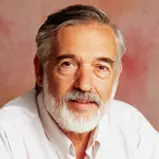
Prof. Noam Lemelshtrich Latar
Prof. Lemelshtrich Latar is the head of the Reichman University Innovation Center, member of the Executive Management Board of Scojen Institute of Synthetic Biology. The Founding Dean of the School of Communications which has been the site of pioneering experiments in employing new communications technologies to study Human Computer Interaction, Human Robot Interaction, Brain computer communications, the effects of Virtual reality on the human cognition.
Received a Ph.D. in Communications from MIT in 1974 under the direction of Prof. T B Sheridan, the global pioneer of the Telemedicine research (NSF grant), M.Sc. from Stanford University in Industrial Engineering in 1971, and a BSc in Mechanical engineering from California State University Northridge (Summa cum Laude).
Pioneered the research papers on touch-screen feedback for interactive communications, on new media and cybernetic decision making, on digital identities (Social DNA), and on Artificial Intelligence robotics in journalism. -

Dr. Ilana Kolodkin-Gal
Dr. Ilana Kolodkin-Gal is a Senior Lecturer and lab head at the Scojen Institute for Synthetic Biology within the Dina Recanati School of Medicine at Reichman University.
Ilana completed her PhD (summa cum laude) in Molecular Biology at The Hebrew University of Jerusalem and conducted postdoctoral research at Harvard University. Prior to joining Reichman University, she was a Senior Scientist at the Weizmann Institute of Science.
Her research explores microbial biofilms, extracellular matrix dynamics, and biomineralization. With over 88 peer-reviewed publications and more than 9,100 citations (H-index 37), her work has appeared in top-tier journals such as Science, Nature, Nature Communications, Science Signaling, Trends in Biotechnology, Cell Reports Physical Science, and Communications Earth & Environment. She served on the executive board of the Israel Society for Microbiology from 2016 to 2022 and currently serves as a co-founder and Audit Committee Chair of the Israel Society for Synthetic Biology, as well as on the editorial and advisory boards of Trends in Biotechnology, Biotechnology Design, and Applied and Environmental Microbiology.
At the Scojen Institute, her laboratory investigates calcium and nucleotide signaling, synthetic microbial consortia, and functional bio-based materials. Her research is backed by substantial, competitive funding, including major awards from the Israel Science Foundation (ISF), the Binational Science Foundation (BSF), and collaborative BSF-NSF research grants.
Through an interdisciplinary approach bridging microbiology, synthetic biology, and materials science, Ilana and her team aim to harness microbial multicellularity to advance innovative therapeutics, microbiome resilience, and sustainable technologies -
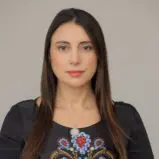
Prof. Milana Frenkel-Morgenstern
milana.morgenstern@runi.ac.il
CVProf. Milana Frenkel-Morgenstern is a Senior Lecturer at the Scojen Institute of Synthetic Biology, Reichman University, specializing in genomics, cell cycle regulation, evolutionary biology, chimeric proteins, and gene-gene fusions. Her research integrates computational and experimental approaches, utilizing cutting-edge sequencing technologies and AI-driven big data analysis to uncover novel biological insights. Prof. Frenkel-Morgenstern is particularly focused on large-scale data analysis of fusion proteins and cell-free DNA, with a strong emphasis on liquid biopsy techniques. She collaborates extensively with top Israeli medical centers and has authored over 80 scientific papers, which have garnered more than 9,500 citations. Her lab plays a key role in significant international projects, such as the Pan-Cancer Analysis of Whole Genomes Project, contributing to advances in cancer genomics and translational research.
Prof. Frenkel-Morgenstern earned her Ph.D. in Computational Biology from the Weizmann Institute of Science. From 2006 to 2009, she served as a council leader of the International Society for Computational Biology (ISCB). During her first postdoctoral training, under the mentorship of Prof. Uri Alon at the Weizmann Institute, she worked in Systems Biology, focusing on the genetic code. In her second postdoctoral training at Prof. Alfonso Valencia's lab at the Spanish National Cancer Research Center (CNIO), she concentrated on cancer genomics, chimeric RNA transcripts, and fusion proteins.
In 2014, Prof. Frenkel-Morgenstern joined the Azrieli Faculty of Medicine at Bar-Ilan University as a Senior Lecturer and Head of the Cancer Genomics and Biocomputing Lab, before transitioning to the Scojen Institute in February 2024. She has served on the Board of Directors for the Data Science Institute (DSI) at Bar-Ilan University for the past six years and has been the audit chair of the Israel Society of Bioinformatics and Computational Biology (ISBCB) since 2015. Currently, she remains an active member of the Board of Directors of ISBCB.Students - Dr. Saibaba Ganesan, Mr. Udi Bahat, Mr. David Bendayan, Ms. Olawumi Giwa, Mr. Dylan D'Souza, Mr. Daniel Sumbatian, Ms. Yonit Leykind, Mr. Tomer Faigler, Ms. Polina Ravikovich, Ms. Danielle Bizur.
-
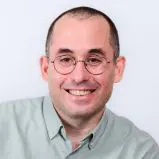
Dr. Oren Moscovitz
Dr. Oren Moscovitz is a senior lecturer and the head of the translational glycobiology lab at the Scojen Institute of Synthetic Biology at Reichman University.
Oren completed his PhD in the Biochemistry Department at the Weizmann Institute of Science. He later became a postdoctoral research fellow of the Alexander von Humboldt Foundation at the Technical University of Berlin and the Max Planck Institute of Colloids and Interfaces in Potsdam, Germany.
Oren's work focuses on glycobiology, synthetic biology, and antibody engineering. In 2018, he established his research group at the Max Planck Institute, where his team investigated changes in the sugar chains that coat cancer cells and explored ways to target them specifically. Their results led to several high-impact-factor publications, patents, and the founding of Tacalyx, a biotechnology startup that develops and commercializes anti-glycan antibody-based cancer therapies. In recognition of his achievements, Oren received the prestigious Hermann Neuhaus Prize of the Max Planck Society in 2024.
In 2025, Oren returned to Israel to establish a lab at the Scojen Institute for Synthetic Biology within the Faculty of Medicine at Reichman University. His current research aims to develop novel antibody-based tools and CAR-T cell therapies against tumor-associated carbohydrate antigens for early detection and treatment of multiple cancer types. In addition, the group will continue to investigate the diagnostic and therapeutic potential of the abnormal redox status of exofacial membrane proteins surrounding cancer and endometriosis cells.
Through their interdisciplinary work, Oren and his team aim to push the boundaries of translational glycobiology, improving treatment and early diagnosis of various widespread and hard-to-treat human diseases.
-
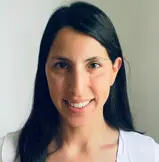
Dr. Liat Rahamim-Ben Navi
Dr. Liat Rahamim-Ben Navi is a lecturer and the Scientific and Technical Director of the Scojen Institute for Synthetic Biology at Reichman University. Additionally, she serves as the Academic Coordinator for the Pre-Medical Programs and oversees the teaching laboratories at the Dina Recanati School of Medicine.
Dr. Rahamim-Ben Navi earned her PhD from Tel Aviv University, where her research focused on unraveling intricate cell signaling pathways in the reproductive axis. She later conducted postdoctoral research at the Technion – Israel Institute of Technology, investigating cannabinoids and their potential therapeutic applications using both in vivo and ex vivo models.
Her current research centers on developing experimental platforms and technologies that integrate synthetic biology, nanotechnology, and biosensing. This work includes creating nanoparticle-based systems and biosensors aimed at characterizing complex physiological and pathological states, with a particular emphasis on applications in neurobiology
-
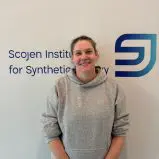
Dr. Yehudit Grinberg
Dr. Yehudit Grinberg is a protein engineer and antibody discovery expert with a PhD in Molecular Biology and Biotechnology from Tel Aviv University. She has extensive experience in recombinant antibody and fragment development, including molecular biology, cell culture, protein expression and purification, affinity chromatography, ELISA, immunoblotting, and flow cytometry.
Her doctoral research focused on reducing the antigenicity of therapeutic antibodies, and her M.Sc. explored novel approaches to preventing Type I diabetes. Both were under Prof. Itai Benhar.
She was a postdoctoral fellow at Tel Aviv University, working on humanizing a modular drug delivery platform under Prof. Dan Peer.
From 2021 to 2025, she served as a research and development scientist at PlantArc Bio, leading and collaborating on academic and industrial projects in a GLP environment. There, she established a bacterial dsRNA expression and purification system and expanded her RNA expertise.
She has co-authored publications, presented at conferences, and gained teaching and mentoring experience. -
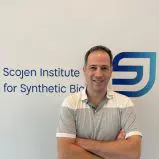
Dr. Itamar Altman
Itamar Altman holds a PhD in Cell Biology, Immunology, and Cancer Research from The Hebrew University of Jerusalem. His doctoral research focused on membrane complement regulation in the gut in protein-losing enteropathy, where he independently developed and applied a novel measurement method. He has a strong academic foundation with an M.Sc. in Biomedical Sciences and an MBA in Biomedical Management. As a research associate in Prof. Yossi Yanai’s lab, he studied neurobehavioral birth defect reversal in animal models and was responsible for lab management and protocol development. Previously, he worked as a senior analytical chemist at Teva Pharmaceuticals, overseeing quality control procedures in a regulated environment. Dr. Altman has extensive teaching experience in neuroanatomy and physiology for medical and nursing students at The Hebrew University of Jerusalem. He is experienced with molecular biology and immunological techniques. His work has involved experimental design, data analysis, and literature review across multiple disciplines. He brings a unique combination of academic research, teaching, and industry expertise. Dr. Altman is a motivated and thoughtful researcher with strong critical thinking and organizational skills.
Advisory Board Members
-

Prof. Elazer R. Edelman
The Edward J. Poitras Professor in Medical Engineering and Science at MIT, Professor of Medicine at Harvard Medical School and at Brigham and Women's Hospital. Director of MIT's Institute for Medical Engineering and Science, the Harvard-MIT Biomedical Engineering Center, and the MIT Clinical Research Center.

-

Prof. Farren Isaacs
Professor of Molecular, Cellular and Developmental Biology, Biomedical Engineering, and Systems Biology at Yale University. Develops foundational genomic and cellular engineering technologies to address global challenges in medicine, energy supply, and environmental sustainability.
-

Prof. Rachela Popovtzer
The Vice Dean of the Faculty of Engineering and a member of the Institute of Nanotechnology and Advanced Materials (BINA) at Bar Ilan University;
working on Nanotheranostics For Personalized Medicine.
-

Brigadier General (Ret) Ehud Schneorson
Former commander of Unit 8200 of the Israeli Defense Forces. Co-Founder, Executive and Chairman with over 30 years of experience in cyber technologies.
-

Jeremy Wertheimer Ph.D
Visiting Scientist at the Broad Institute of MIT and Harvard, has co-founded companies in computational antibody design, super-resolution microscopy, synthetic cells, computational protein design, and space technologies.
-

Mr. Gideon Wertheizer
Executive and board member with over 30 years of experience in the Semiconductor and Semiconductor IP industries.