

When it rains, it pours – Coronavirus, elections, and money laundering in Iran
By Col. (res.) Udi Evental | February 29, 2020
 |
| Photo: Mehr News Agency | CC BY 4.0 |
Pressure is mounting on the regime in Teheran. Having dealt with the killing of Soleimani at the beginning of this year, the Coronavirus broke out in Iran.
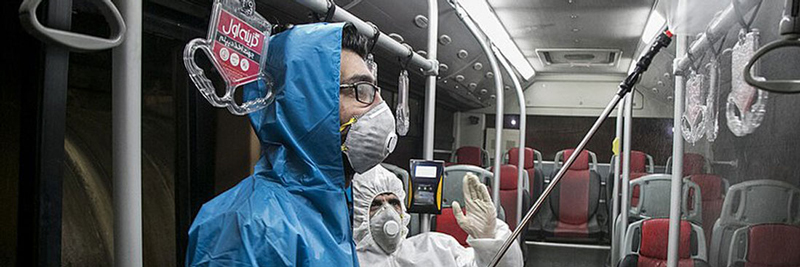
First detected in Qom – a site of religious pilgrimage – the virus spread to Teheran, to the northwest and northeast, and to the far south, all the way to the Arab province of Khuzestan. Today, it has been detected in 20 provinces (out of 31 in the country). Official numbers are constantly rising: 43 fatalities (the highest death toll outside of China) and 593 confirmed cases, senior officials among them. The authorities, denying much higher numbers (BBC reported at least 210 deaths), are accused of covering the real scope of the contamination, and of governance malfunction.
In the country, there is a sense of a state of emergency. Media has reports of plans to quarantine Teheran and in several provinces, public schools have been closed and sport and culture events have been cancelled. A group of medical doctors called to close schools and cancel public events across the country until after the Nowruz, the Persian new year, which ends in late March. The regime set up a quarantine facility in a small town in the northwest province of Gilan. Local residents took to the streets to protest the decision and regime forces used force to disperse the demonstrations – a filmed incident that went viral on social networks.
The outbreak of Coronavirus in Iran has disrupted Iran's commercial and tourist exchanges with neighboring countries, many of which announced confirmed cases originating in Iran. Iraq, Saudi Arabia, UAE, Kuwait, Oman, Afghanistan, Pakistan, Turkey, Syria and Azerbaijan are among the countries that have reduced or cut-off land, sea and air traffic with Iran. Lebanon decided to end flights to-and-from Iran, only after a vivid public controversy, in which Hezbollah, Iran's proxy, came out against cutting-off air traffic.
The Coronavirus outbreak in Iran coincided with parliamentary elections to the Islamic Consultative Assembly (Majlis). After the regime disqualified some 90 incumbent parliamentarians and several thousand candidates all affiliated with the reformist camp, a landslide victory of the conservative camp was expected. While the reformist camp held the majority in the outgoing Majlis (as part of a coalition with independent members), the new Majlis will be under full control of the conservatives with 180 seats (at least) out of 290 in total.
The election results appear to be good news for the Iranian leader Khamenei and his conservative camp. However, in light of the public distrust in the regime and in the election's procedures, the voter turnout became a central issue, overshadowing the results themselves. Preliminary data shows that the national turnout was 42 percent (in Teheran 22 percent!) – the lowest since the Islamic revolution. The regime invested considerable efforts in an attempt to raise voter turnout and found itself on the defensive as results were published. Khamenei declared that Iran's enemies spread rumors regarding the outbreak of the Coronavirus to harm the elections.
While the spread of the Coronavirus dominated the agenda and drew away attention from the elections, Iran took another blow. The Financial Action Task Force (FATF) – an intergovernmental organization founded to combat money laundering and terror financing, decided to add Iran to its blacklist, which insofar included only one country, North Korea.
The FATF published a statement calling to apply "effective counter-measures" against Iran and to enhance monitoring to mitigate the risks to the world economy emanating from Iran's action. The decision follows years of deliberations between the organization and Iran, during which Iran refused to adapt its laws to meet international rules on money laundering and terror financing. The radical groups within the Iranian regime – including the IRGC – opposed to implementing the regulations as they are involved in funding and supporting terror organizations.
These blows are expected to increase the isolation of the regime in Teheran – internally, geographically, and financially. Iran's neighbors are sealing their borders with Iran, its financial institutions are labeled as a risk to the global economy, and the low voter turnout reflects the eroding domestic legitimacy of the regime.
The outbreak of the Coronavirus and the FATF resolutions are expected to further harm the Iranian economy. The Iranian Rial depreciated again to IRR160K to USD1 (two months ago it was IRR130K to USD1) and the sealed borders will harm Iranian imports and exports. Notwithstanding, the Iranian economy is already under siege due to the American sanctions that have slashed 90 percent of Iran's oil exports and the international financial system is applying extreme monitoring measures on Iranian international transactions.
Domestically, the economic damages and the regime's mishandling of the Coronavirus outbreak, which it sought to conceal, will likely increase public discontent that has fueled waves of protests and demonstrations across the country, in the last two years. In response, the regime is expected to strengthen its grip and enhance its surveillance and control in the public sphere. It seems that following the elections, the conservative camp is more exposed and cannot hide behind the Majlis or the Rouhani government, which the public no longer considers as representing the drive for change and reforms.
Under these circumstances, the regime's sensitivity to American pressure is rising. However, the regime is unlikely to respond to American calls to return to the negotiating table – while it is in a weak position. Furthermore, the growing American pressure to bring about a "snapback" of international sanctions on Iran – the last nail in the JCPOA coffin – reinforces the perception of the Iranian regime that Washington is not really seeking a new deal with Iran, but rather seeks to topple the regime.
Authored by Col. (res.) Udi Evental
If you wish to receive the weekly brief regularly, please follow the link to register.
