

Accessibility menu
Research and Teaching Expertise
-
Law and social change
-
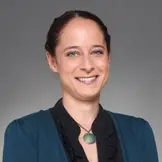
Adv. Ziv Lidror holds an LL. B and LL.M degree in Law, specializing in public and international law, from the Hebrew University of Jerusalem and is currently pursuing a PhD under the supervision of Prof. Lior Zemer, focusing on the role of community in rehabilitation processes. She worked as Justice Edna Arbel’s legal assistant at the Israeli Supreme Court. In 2012 she joined the Legal Clinics staff at Reichman University, first as a tutor at the legal aid clinic for Holocaust survivors and at the "Street Law” Legal Clinic, and later as a head of the “Street Law” clinic. In addition to directing the clinic and teaching the course that is taught alongside the clinic’s field work (in the fields of social lawyering, law and poverty, youth law and rehabilitation), she developed the field of legal writing and critical reading courses, as well as the interdisciplinary interfaces between legal studies and the field of rehabilitation at the Harry Radzyner Law School.
As part of this approach, she teaches the course “Rehabilitation Law” and heads the “Nekudot Zchut” (Credit) program - a joint course for prisoners and students on social-economic rights – the first academic course of its kind in Israel, that opened for the first time in 2018 (see details below). One of the main projects she has been engaged in following the events of October 7th is the “Community, Building, Rehabilitation” workshop - a program she co-founded and developed together with Prof. Lior Zemer and Omri Ronen – a practice-based academic course that was initiated in the aftermath of October 7th. This workshop originated from a shared vision with Prof. Zemer, who conceived the idea and proposed combining their mutual belief in the transformative role of academia with her doctoral research, which examines the role of community in rehabilitation processes (see further details below).
About the “Community, Building, Rehabilitation” Workshop:
This is a practice-based academic seminar built on two central pillars: theoretical academic learning on the topic of community rehabilitation, and active participation in rebuilding community structures damaged in the war. The workshop is a collaborative initiative of the Harry Radzyner Law School at Reichman University, the “Rebuilders” organization (in cooperation with “Brothers and Sisters in Arms”), and of course, the local communities where the construction projects take place.
In the pilot cohort, launched in May 2025 as an intensive five-day program, the students served as a pioneering team in the reconstruction of the "Neurim" neighborhood in Kibbutz Kfar Aza. Alongside the physical work, they attended academic lectures - mainly in the legal and psychological fields - and met with practitioners and community members.
As the culminating product of the workshop, the students presented policy papers offering practical proposals for community rehabilitation - many of which emerged organically during the construction process and from conversations with the community members.
Starting from the next cohort, expected to open in the 2025–2026 academic year, the program aspires to include young adults from the communities themselves, exposing them to academia as part of their personal and communal rehabilitation journey. In parallel, the initiative aims to expand into new types of communities (including urban communities), new fields of action, and additional academic disciplines. Through this, the program seeks to deepen the impact of academia on the rehabilitation of society - its communities and individuals - while strengthening students’ academic skills and fostering meaningful, practice-based learning.
About the “Nekudot Zchut” (Credit) program – a joint course for prisoners and students on economic social and cultural rights:
The course, worth 4 credits (for all participants - prisoners and students alike), was founded with the understanding that there is an added value to academic learning that brings together different populations (in this case - the students and the prisoners) and to action-based learning. Adv. Lidror developed this course – dealing with the content of social-economic rights course where half the students are prisoners, and the other half are law students at Reichman University. All participants are required to go through a screening process that includes academic standards. In the first part of the course, the students learn the subject of social rights together, and in the second part, they are divided into teams and together they write and submit a research paper addressing policies related to economic social, and cultural rights. In the second Cohort of the program, the students were invited to present their policy papers to the President in the president’s residence. (For more details on the program - visit https://www.runi.ac.il/schools/law/special-programs/credits-program/ )
About the Street Law clinic:
The purpose of the “Street Law” clinic is to introduce our law students to underprivileged populations who were exposed to the justice system from the other side - either as violators of the law or as victims. The idea behind the program is that legal knowledge has the power to bring social change and that a significant change is made with a holistic view between law and the fields of treatment and rehabilitation. In the framework of the clinic, the students prepare a weekly workshop for the participants, at the end of which they present a mock trial (or another event/project). It should be noted that following the Coronavirus crisis, the work model was adapted to the target populations and the crises and that some of the insights of the work during this period have been embraced, in particular in our work with people under house arrest and youth at risk in the Arab sector. The program operates in 8-10 centers a year, including prisons (unique cooperation for this program), the probation service, correctional institutions for youth at risk and a shelter for victims of domestic violence.
About the Rehabilitation Law course:
This course, specifically designed for final-year students in the joint Law-Psychology program, was developed in part based on insights gained from the fieldwork conducted in the above-mentioned courses, as well as from research focused on concrete rehabilitative tools – community as a rehabilitative framework, rehabilitation through employment, and rehabilitation through academic education.
The course invites students in the joint program to critically examine the applicability of these and other rehabilitative tools to additional populations in need of rehabilitation, which Adv. Lidror proposes to conceptualize under the heading “Rehabilitation Law.”
-
Ziv Lidror and Idan Portnoy “Thinking Outside the Box: Reducing Recidivism with Employment - Solutions Deviating from Criminal Law” Law and Business Volume 71 (2021)
:About the article (a translated abstract of the paper above)Written by adv. Ziv Lidror, Head of the “street Law” clinic and a lecturer at Reichman University in Herzliya, and Idan Portnoy, alumni of the ”Street Law” clinic and founder of the “Back to Society” organization – that connects employers who want to help released prisoners re-enter society. In the article, they offer rehabilitation through employment as a way of reducing recidivism, specifically through changing the policies to encourage employers to employ released prisoners. Many of the observations in the article were formed in light of the theoretical knowledge and practical work in the “Street Law” clinic. Following the publication of the article the authors intend to continue to promote these ideas, both in their work in the clinic and outside of it (as they have already done in front of the Employment forum for Offenders, the Internal Affairs Committee of the Knesset, and more).
-
yediot ahronot weekend magazine
A mock trial in priosn - The Street Law Program
The president of the stat of Israel hosted students of a joint academic course for prisoners and stu
Radzyner Law School Raises the Bar in Street Law Clinic
IDC Students Help Prisoners Gain a Second Chance at Life
Back to society - the project that tries to give prisoners another chance
From the University to the Youth Neighborhood
-
“Nekudot Zchut” (Credit) - A joint program for prisoners and students on social and economic rights
Rebuilding Community: Pathways to Rehabilitation
Rebuilding, Community, Rehabilitation