

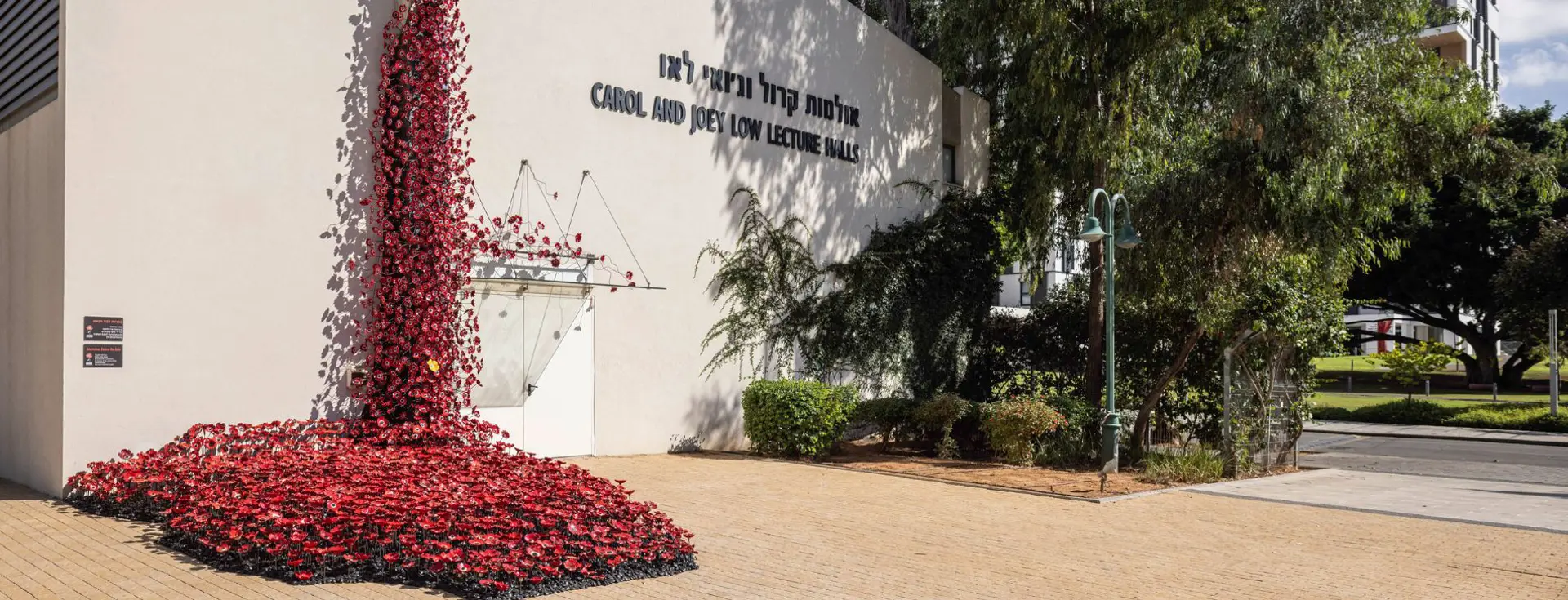


The installation “Anemones Before the Rain” is on display at Reichman University, in commemoration of the one-year anniversary of the war’s outbreak and in conjunction with of the annual conference of the International Institute for Counter-Terrorism (ICT)
To mark the one-year anniversary of the October 7 disaster and the outbreak of the “Swords of Iron” war, the powerful exhibit “Anemones Before the Rain” has been erected at the heart of the campus. Anemones, or kalaniyot in Hebrew, are the red flowers that bloom in Israel’s south during the winter. The instillation is a national project led by the artists Yaffe Solomon, Varda Har Zvi, Pnina Lachish, and Shlomit Hefer, and its display on the university campus coincides with the annual World Summit on Counter-Terrorism convened by ICT, to take place between October 6-8.
The display, which will be viewed by attendees of the international conference, features a waterfall and a carpet of approximately 5,000 handcrafted clay anemones, lovingly made by volunteers from across the country.
In the framework of the “Anemones Before the Rain” project, more than 100,000 red clay anemones have been created and distributed across the country. Of these, about 30,000 were planted at the site of the Nova music festival, and the rest were placed in various locations across Israel, including on the kibbutzim in the Gaza Envelope, major cities, hospitals, cemeteries where victims were laid to rest, military bases, and more.
Hundreds of artists and volunteers from all over the country have joined the traveling project, which was initiated by artist Yaffa Solomon during a meeting at her home in Meitar. The anemones symbolize the profound grief for the young lives, like delicate flowers, that were plucked before their time, and at the same time the hope for a renewed bloom in the future.
The red anemones that stand resilient against the backdrop of destruction and devastation left by that terrible Saturday are chilling and painful on the one hand, but on the other symbolize optimism and hope for the renewal of the communities that will once again flourish.
The Shabtai Shavit World Summit on Counter-Terrorism, the annual conference held by the International Institute for Counter-Terrorism (ICT) at Reichman University, is recognized as one of the foremost conferences in the world on counter-terrorism. The summit is attended by decision-makers and public figures from Israel and abroad, diplomats, current and former senior security officials, journalists, and media figures. Following the October 7 disaster, the institute decided to hold the conference during the week of October 7 each year going forward.
President of Reichman University Prof. Boaz Ganor: “Placing the anemone exhibit at the heart of the university, a university that has lost 13 of its best sons since the war began, sends a message to the younger generation and the conference attendees to remember and honor the fallen, but at the same time to look forward with hope for a future of growth and renewal. Among the carpet of red anemones stands one yellow anemone, symbolizing our hope for the release and swift return of our student Idan Shtivi and all the other hostages. I would like to thank the leaders of this project from the bottom of my heart for their initiative and dedication in spreading the anemones throughout Israel and for agreeing to bring this unique project to our university.”
Artist Yaffa Solomon: “The instillation captures the deep sadness and frustration caused by the horrific massacre and the bloodshed, represented through the anemones, a flower so emblematic of the southern region and the Western Negev. Yet, these anemones also carry a glimmer of hope. The idea is that anyone can come to see and connect with the display, show solidarity, and find meaning.”
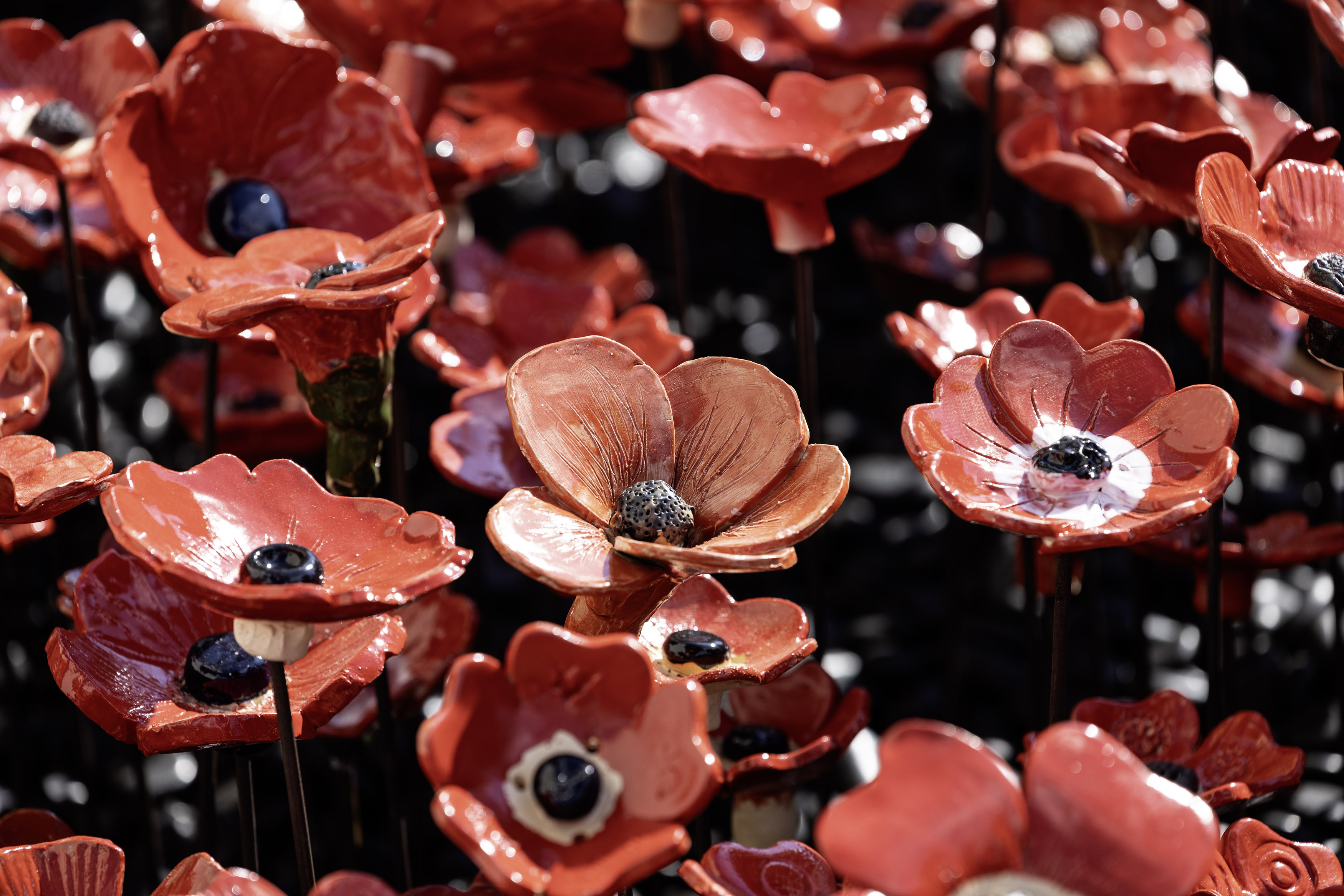
Photo by: Amit Geron