

Is Normalization on the Table Again?
By Dr. Shay Har-Zvi | December, 2024
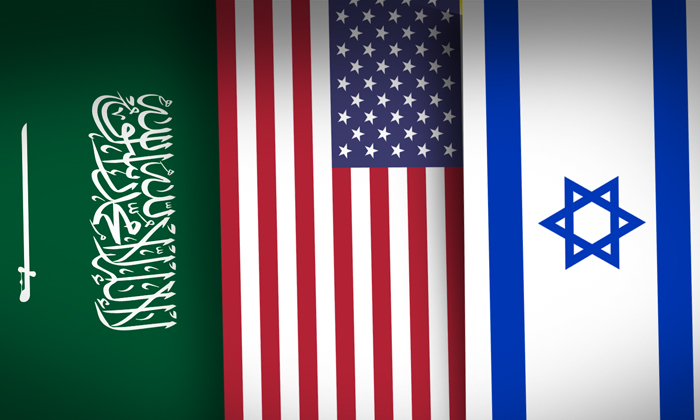 |
Trump’s election as U.S. President has once again sparked hopes of promoting a historic normalization agreement between Israel and Saudi Arabia. Many believe it to be one of the President Elect’s primary goals in the Middle East in an effort to pursue what he was unable to accomplish during his first term in office. Such a trilateral accord would have vast strategic, security, and economic implications, requiring each of the actors involved – the United States, Saudi Arabia, and Israel – to promote various components for it to be achieved.
Yet the statements issued in recent days by Saudi Arabia and Israel convey a clear message – the road to this desirable outcome is both long and rocky. The Saudi Crown Prince and heir to the throne, Mohammed bin Salman, attacked Israel harshly during the Arab-Islamic summit in Riyadh, accusing it of committing war crimes and genocide in Gaza. Curiously, around the same time, the Saudi army chief paid a rare public visit to Iran, and the Crown Prince spoke to the President of the Islamic Republic.
Bin Salman’s statement was not made in a vacuum. Despite the ongoing war, Saudi Arabia has reiterated its desire to advance normalization with Israel. However, it is conditioning normalization on the establishment of a Palestinian state – a stipulation that Prime Minister Netanyahu is currently rejecting. Nor is the Israeli head of state willing to convey support for a two-state solution, despite having done so several times in the past. Moreover, some parties within the Israeli coalition and in rightwing circles have expressed their desire to resettle Jews in Gaza. Finance Minister Smotrich has even declared that 2025 will be the year when Israeli sovereignty over the West Bank will be established.
For the Saudi Crown Prince, the normalization agreement is a strategic choice, especially in view of the unprecedented rewards Saudi Arabia stands to gain from the United States as a part of it. From bin Salman’s vantage point, it would be a key component in promoting his vision for Saudi Arabia’s status and role in the regional and international system in the years to come. First and foremost, in the establishment of a defense alliance between Saudi Arabia and the United States, whereby the latter will provide the former with state-of-the-art weapon systems, and assist its development of a civil nuclear program. However, whereas the establishment of a Palestinian state was not declared a precondition before the war broke out, these days bin Salman is realizing that he cannot place this issue on the back burner and must, at least for the sake of appearances, paint himself as a fighter for the Palestinians’ right to a state. Thus, his message to Trump and Netanyahu is clear – if the Israeli Prime Minister’s position on the Palestinian Authority will not shift, and as long as the war in Gaza continues, not only will Saudi Arabia remain unable to advance normalization, but it will also be forced to foster a strict approach to Israel, while continuing to grow closer to Iran.
The question is, will Trump be able to promote this defense alliance with Saudi Arabia? For the U.S. constitution requires the approval of 67 senators, which means Trump will have to garner the support of at least 14 Democratic senators. This goal may not be achievable, since the United States is extremely polarized, and, what is worse, some Democratic senators are disgusted by the Saudi Crown Prince, believing him to be responsible for the murder of Saudi journalist Jamal Khashoggi. Nevertheless, the U.S. and Saudi Arabia could sign a defense agreement that, while not as binding as a defense alliance, would still harbor considerable potential advantages for the Arab Islamic kingdom.
Ostensibly, Prime Minister Netanyahu can be pleased with the appointments already made by the U.S. President Elect, such as those for Secretary of State, National Security Advisor, U.S. Ambassador to the U.N., and U.S. Ambassador to Israel, all of whom are hawkish and avid supporters of Israel. However, Netanyahu may soon discover that these appointments do not necessarily indicate that Israel will be given the freedom to do as it pleases in general, and in the Palestinian theater in particular. At the end of the day, the U.S. administration’s policy will be shaped and determined by Trump himself, whose priorities in the international arena are clear – fighting China before all else. In the Middle East he will strive to end the wars in Lebanon and Gaza, as well as advance a new nuclear deal with Iran, with the grand prize expected to be the said normalization agreement with Saudi Arabia.
Trump is therefore likely to demand that Netanyahu play his part in the promotion of this large deal, especially with regard to conveying support for the two-state solution, and avoiding unilateral steps in the West Bank that could be interpreted as an annexation of territories, and would, in effect, jeopardize any possibility for such a deal. Knowing Trump’s typical conduct and character, he will do his all not to miss the opportunity to achieve normalization, due to the strategic, security, economic, and even personal gains it harbors. This means that, should Trump come to realize that Prime Minister Netanyahu’s stance is jeopardizing, or even just delaying, the normalization agreement, the personal relations between the two heads of state (which have had their ups and downs over the years) would be gravely impacted. Such a realization could even project onto Trump’s attitude toward other requests that Israel may make.
Prime Minister Netanyahu is facing a fateful crossroad for the future of the State of Israel – the possibility of signing a historic peace accord with the most important country in the Arab and Muslim world that would alter the strategic balance in the Middle East for many years to come. Such an agreement would also open the door for Israel to many opportunities for economic and security partnerships with other countries (Indonesia?), while allowing it to further deepen its strategic alliance with the Arab states, under U.S. leadership, against the Iranian axis. Such a development would have tremendous bearings on an overall strategic Israeli policy against the threat posed by Iran, primarily that of the weapons-grade nuclear program. In fact, Prime Minister Netanyahu must choose between broad regional strategy and domestic politics. It is now time for bold decisions to be made, for a missed opportunity could be lamented for generations.
Authored by Dr. Shay Har-Zvi, Senior Fellow, Institute for Policy and Strategy (IPS), Reichman University.
If you wish to receive the weekly brief regularly, please follow the link to register.
