

Is the Palestinian Arena Headed for a Strategic Shift?
Hezi Simantov
September, 2026
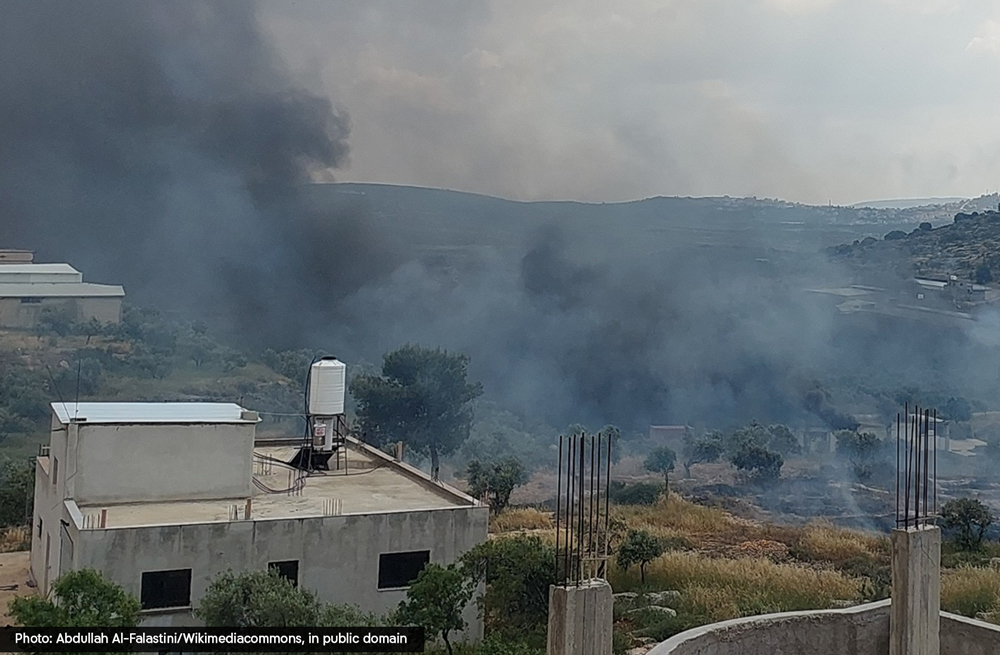 |
| Photo: Abdullah Al-Falastini/Wikimediacommons, in public domain |
This website uses cookies for functional reasons and to improve your browsing experience. By continuing to use our website or by closing this notice you consent to our privacy-policy.
X
|
| Photo: Abdullah Al-Falastini/Wikimediacommons, in public domain |
The Palestinian arena is approaching a turning point unlike any seen in recent years, amid escalating tensions in Judea and Samaria. Apparently coordinated attacks by extremist Jewish settlers against Palestinians, rising violence, a severe financial crisis in the Palestinian Authority (PA), daily friction, and the absence of political prospects have brought the situation to the brink of a wider flare-up.
Developments in Gaza, Hamas incitement, and the struggle over Abu Mazen’s succession could turn a localized outbreak in Judea and Samaria into a crisis on multiple fronts. Such a crisis could compel Israel to use greater force at a time when international support for it has eroded. The challenge is to prevent a broad security escalation, the collapse of the PA, and a further decline in Israel’s international legitimacy.
Rising Tensions in Judea and Samaria
The situation on the ground in the West Bank is less a period of “relative quiet” than a lull before a potentially widespread outbreak of violence.
Although the Israel Defense Forces (IDF) and Israel Security Agency (ISA) are taking determined, professional action against Palestinian terrorist infrastructure and working to reduce friction between Palestinians and Jewish settlers, inadequate law enforcement against Jewish terrorism is deepening Palestinians’ sense of helplessness and fueling incitement.
Against this tense backdrop, the Jewish High Holidays increase the risk of escalation. For years, non-Muslims have been permitted to visit the Temple Mount only at designated times. Jewish prayer at the site—and the de facto erosion of the status quo—remains at the heart of the dispute. Any violent incident there could give Hamas and radical elements within the PA grounds to call for a “religious war” and mobilize Palestinians, Arab citizens of Israel, and the wider Muslim world against Israel.
The PA’s severe financial crisis, compounded by delays in the transfer of tax revenues and pressure from Israeli Finance Minister Bezalel Smotrich, is further undermining its stability. If the PA collapses, Hamas will find fertile ground for turning desperation into terrorist activity at a time when Israel’s international legitimacy is declining—even in the United States.
Gaza: Disarming Hamas and Planning for the Day After
In Gaza, a distinction must be made between ending Hamas’s civilian rule and disarming it militarily while dismantling its social influence. In July 2026, Hamas announced the dissolution of its Government Emergency Committee and proposed transferring its powers to a technocratic committee. The question of disarmament, however, remained unresolved. This was no coincidence. Hamas seeks to retain control over Gaza’s civilian population while relinquishing responsibility for civilian governance and continuing to intimidate Gazans.
Relinquishing civilian responsibility serves one purpose: survival. Hamas wants other organizations to bear the cost of rebuilding Gaza while it concentrates on restoring its personnel and military infrastructure. This resembles the model followed by Hizballah in Lebanon: an independent armed organization operating alongside a civilian government.
Some organizations involved in rebuilding Gaza may support Hamas, including groups affiliated with Turkey and Qatar. Without effective oversight, Hamas could rebuild its forces while maintaining its influence.
Elections and the Succession Struggle Weaken Abu Mazen
PA Chairman Mahmoud Abbas, known as Abu Mazen, has scheduled elections for the Palestinian parliament, or Legislative Council, for November 28, 2026, in East Jerusalem, the West Bank, and Gaza. Even if the elections are canceled, their announcement alone significantly weakens his position. It accelerates alliance-building and power struggles within Fatah, deepens the leadership’s legitimacy crisis, and makes Abu Mazen appear weak to Hamas and the broader Palestinian public.
According to an August poll conducted by Khalil Shikaki’s Palestinian Center for Policy and Survey Research, support for Hamas has fallen and now stands at 24%, equal to support for Fatah.
Marwan Barghouti, who is serving five life sentences in an Israeli prison for terrorism, is the strongest presidential candidate. His candidacy could turn the election into a referendum on his imprisonment and place the question of his release on the international agenda. Barghouti, a senior Fatah figure and head of the Tanzim during the Second Intifada, supports armed struggle if a Palestinian state is not established. His popularity in the polls should be a serious concern for Israel.
At the same time, Mohammad Dahlan, Hamas, and some Fatah officials are considering potential alliances. Hamas and Dahlan are exploring the possibility of running together.
For Israel, the central issue is not the identity of Abu Mazen’s successor but preventing Hamas from gaining legitimacy as a political actor. Its participation could lead to the immediate radicalization of the PA and the end of security coordination against terrorism in the West Bank. It is therefore in Israel’s interest to postpone the elections for as long as possible.
The Strategic Implications
The worst-case scenario is a broad escalation—a third Intifada. Organized acts of Jewish terrorism against Palestinians would directly fuel unrest in PA-controlled areas. An incident at the Temple Mount and al-Aqsa, or a series of severe violent incidents in the West Bank, could trigger widespread protests at a time when weakened PA institutions may be unable to contain them.
Hamas and radical elements within the PA would use such an escalation to intensify incitement and violence. Israel would respond by deploying substantial IDF forces, and a high number of Palestinian casualties would aggravate the crisis. The cycle of violence could expand and draw in protesters across the Arab world.
People could also take to the streets in the Hashemite Kingdom of Jordan. Muslim Brotherhood supporters would use the situation to destabilize King Abdullah II and might even attempt to topple him. Radical Islamic organizations affiliated with the Muslim Brotherhood seek to establish a state within Jordan’s borders governed by Islamic law and supportive of Hamas. The Muslim Brotherhood was outlawed in Jordan in April 2025.
The PA’s financial crisis would intensify, Arab states would condemn Israel more forcefully, and the U.S. administration would have little patience for a prolonged military campaign. Under these circumstances, Israel would act with diminished international legitimacy, while Hamas would present itself as the immediate alternative to the PA amid growing hostility toward Israel.
Recommendations
Temple Mount: Preserve the status quo during the Jewish High Holidays, coordinate with Jordan and the PA, and counter rumors in real time.
Terrorism: Continue to thwart Palestinian terrorism determinedly and systematically.
Law enforcement: Stop the rising violence against Palestinians.
Palestinian Authority: Prevent its functional collapse by transferring tax revenues through a controlled mechanism, conditional on measurable steps against corruption, incitement, and terrorism.
Gaza: Insist on Hamas’s complete disarmament. Establish an effective external mechanism to oversee funding and reconstruction, and prevent Qatar and Turkey from gaining a foothold in Gaza.
Elections: Prepare for both the elections and their possible cancellation. Adopt a position opposing Hamas’s participation and the candidacy of imprisoned individuals, particularly Marwan Barghouti.
Diplomacy: Initiate advance talks with the United States, Jordan, Egypt, the United Arab Emirates, Saudi Arabia, and the European Union. Present the escalation scenario and build international support in advance for responding to widespread violence.
