

Can a U.S.-Iran Agreement be Reached?
Implications for Israel
March, 2026
 |
| Photo: Canva AI |
This website uses cookies for functional reasons and to improve your browsing experience. By continuing to use our website or by closing this notice you consent to our privacy-policy.
X
|
| Photo: Canva AI |
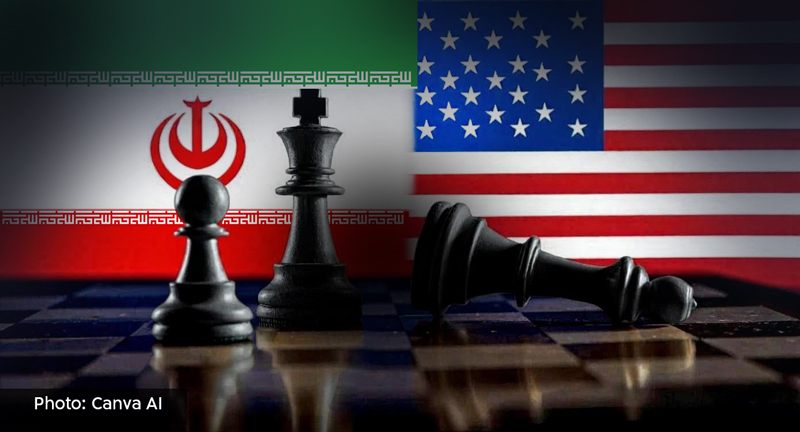
The rejection of President Trump’s ultimatum and ongoing U.S.-Iranian talks leave the campaign against Iran at a crossroads. It would appear that the U.S. President’s approach provides him with two options – reaching an agreement that would end the war, or escalating to a ground offensive that would open the Strait of Hormuz. The implication could be a landslide that would upend the regional system and lead to a global energy crisis, reflecting on the U.S. domestic arena too. On Israel’s northern front there is growing concern that ending the war with Iran would lead to suspending the fight against Hizballah, which continues to maintain significant firing capabilities.
The possibility of advancing a U.S.-Iran agreement that would end the war harbors far-reaching implications for Israel. Therefore, before all else, Israel must prepare for a state of affairs that lacks clearcut developments in the form of the Iranian regime being toppled and the elimination of the threat posed by Hizballah, particularly vis-à-vis its northern border.
Thus, following a relatively long hiatus resulting from a possible agreement between the United States and Iran, Israel’s response should be based on an effective plan to compromise Iran’s capabilities and topple its regime as an overarching goal. At the same time, a combined military and diplomatic plan should be formed to ensure a lasting and significant minimization of the threat posed by Hizballah to allow the Lebanese government to exercise its sovereignty across Lebanon.
Conflicting Strategies
President Trump’s recent statements indicate that his first priority is to reach an agreement that would meet the fundamental principles that he himself presented as red lines. First and foremost, preventing Iran from obtaining nuclear weapons, ensuring freedom of navigation in the Strait of Hormuz, shutting down the development of Iran’s missile program, and severing the assistance it has been providing its proxies across the Middle East. What is clearly missing from the current discourse in Washington, however, is the toppling of the Iranian regime, an objective that the U.S. administration believes to be unachievable in the immediate future.
In contrast, should the negotiations fail, President Trump believes he will be able to blame Iran for torpedoing it, while painting himself to be the leader who had made every effort to strike a deal in the eyes of the American public, and particularly his Republican constituency. Consequently, he is forced to continue his military campaign, and take even stronger action against Iran.
In any case. The U.S, is preparing for a scenario in which it will be forced to take military actions, as evidenced by the ongoing buldup of forces and the arrival of 2500 Marines in the Gulf region.
Above all else, the Iranian regime is striving to ensure its own survival. In practice, despite the blows sustained by symbols of the government, as well as the military and defense establishments in Iran at the hands of both the United States and Israel, the regime believes it will be able to withstand these massive attacks and effectively survive. First and foremostdue to the regime's strong and ruthless ideological establishment that relies on the unwavering support of its security apparatuses, led by the Revolutionary Guards and Basij Forces. The Iranian regime also seems undaunted by the prospect of a significant U.S. ground offensive posing a threat to its survival.
The Gulf States - A Cautious Approach
In general, the Gulf States are hoping for a fundamental change in the nature of this radical Iranian regime that has been posing a tangible threat to their security. Despite Iran’s massive attacks against them, for the time being they are clearly unwilling to retaliate, although they have the necessary military force and extensive U.S. support at their disposal to do so, for fear that a strong Iranian response to such offensive action would cause considerable detriment to their energy and water infrastructures.
Areas of Flexibility in Agreement
At present, the gaps between the two parties seem deep and unbridgeable. However, since both the United States and Iran appear to share the interest of ending this conflict, some meeting points may be identified that could form a possible basis for an agreement. In President Trump’s view, the two core issues are preventing Iran from obtaining nuclear weapons, and ensuring freedom of navigation in the Strait of Hormuz.
Past experience has shown that Iran can commit to refraining from the pursuit of nuclear weapons. It resolved to stop its nuclear program in 2003, and signed the JCPOA with the global powers back in 2015. Moreover, the Supreme Leader had issued a religious fatwa prohibiting the development of nuclear weapons. Thus, Iran may agree, inter alia, to remove the 440kg of enriched uranium it has accumulated, and reinstate International Atomic Energy Agency (IAEA) oversight. Similarly, Iran is likely to agree to reopen the strait to free passage under any agreement signed.
However, Iran does not seem to be willing to agree to any significant restrictions preventing the development of its various missile capabilities. It is also unlikely to agree to limit the support it extends to its proxies, as it is a fundamental aspect of its revolution exporting strategy, and a key method of building deterrence across the Middle East. Tehran is also expected to demand that all economic sanctions imposed on it be lifted.
Thus, it is highly concerning that, even if an agreement will be reached, it will not truly address the multidimensional threat posed by Iran, embodied by the murderous and radical nature of its regime. Any agreement signed would be presented by the Iranian government as a victory, and marketed as a demonstration of its power and the inability to oust it. Furthermore, the lifting of even some of the sanctions currently imposed on Iran would provide this ruthless regime with breathing room to contend with the severe financial distress it is currently under.
Policy Recommendations for Israel
Israel is determined to remove all aspects of the Iranian threat; however, it must also take into account that President Trump will be the one to decide on the timelines of this ongoing campaign. This means that the signing of an agreement would lead to ending the war against Iran. Israel must therefore prepare for the Iranian regime’s possible survival, and even the gradual regaining of its capabilities, which the former must also prepare to counter in the future. For no change is expected to occur in Iran’s radical view advocating for Israel’s annihilation, and its covert efforts to develop its strategy-implementation capabilities.
As for the tangible and intolerable threat posed by Hizballah, Israel must form a strategy that would provide a thorough solution, and remove this threat that has been hovering over its northern residents for many years to come. Such a strategy should be coupled with a masterplan to rebuild northern Israel as a safe and prosperous area. Alongside its ongoing military activity, and the option of expansion of its presence all the way to the Litani River, Israel would do well to condition the return of Shiite residents to Southern Lebanon on a proper agreement demanding that Hizballah be disarmed. It should also continue to promote a combined political and economic campaign, primarily through the United States, to force the Lebanese government to take action against Hizballah.
On the regional front, Israel must utilize its shared interests with the moderate Arab states to examine ways of expanding the Abraham Accords and advancing normalization with Saudi Arabia. Such a development would be a force multiplier in the long-term multidimensional coping strategy with Iran and its regional proxies.
