


Everything Is on Us: From Workforce Gaps to National Strength
By Tuly Michael 1st Year Student, Entrepreneurship School
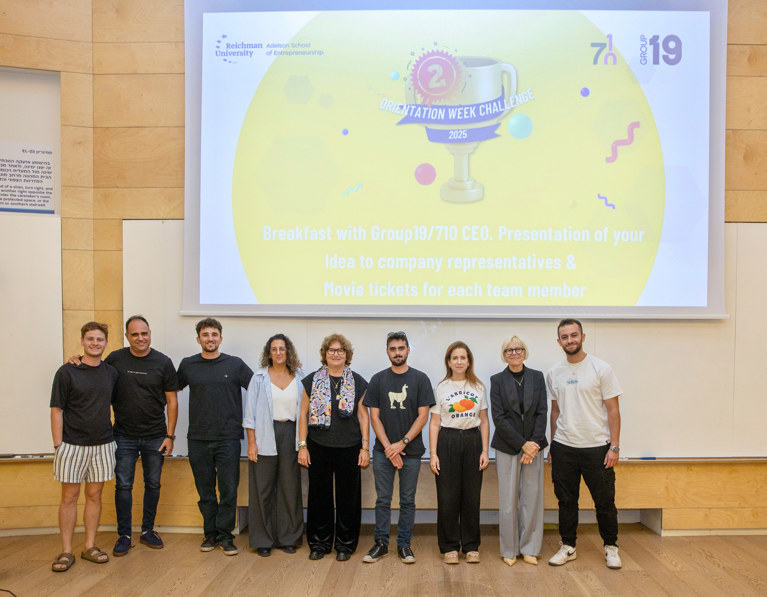
During Orientation Week, our team took part in the Group19 Hackathon with the Entrepreneurship School. This was a challenge focused on connecting workers in Israel’s periphery with companies based in central Israel. The issue was layered: workers all over Israel are struggling to compete with outsourced labor from countries like India and Ukraine. At its core, the question was: what priority of business overrides short term cost savings. Of course, without fail it is national security, and the safety of its employees as a whole.
The biggest challenge we faced however wasn’t the problem itself, but rather time. Like many groups, we spent the first stretch just trying to understand the brief. By the time our direction became clear, we had barely half an hour left to structure a presentation that could stand out. With that constraint, every minute counted. Teamwork meant brainstorming and open discussion more than anything else. The real value of collaboration wasn’t just in dividing tasks, but in refining a single clear message that reflected everyone’s input.
The tail end of our solution came down to a tagline: “הכל עלינו” (“Everything is on us”). Through an ad campaign aimed at professionals living in central Israel. We wanted to encourage companies and potential workers to think less about short-term profit and more about long-term stability. All of this combined with the recent wars would hold a clear assimilation to national security.
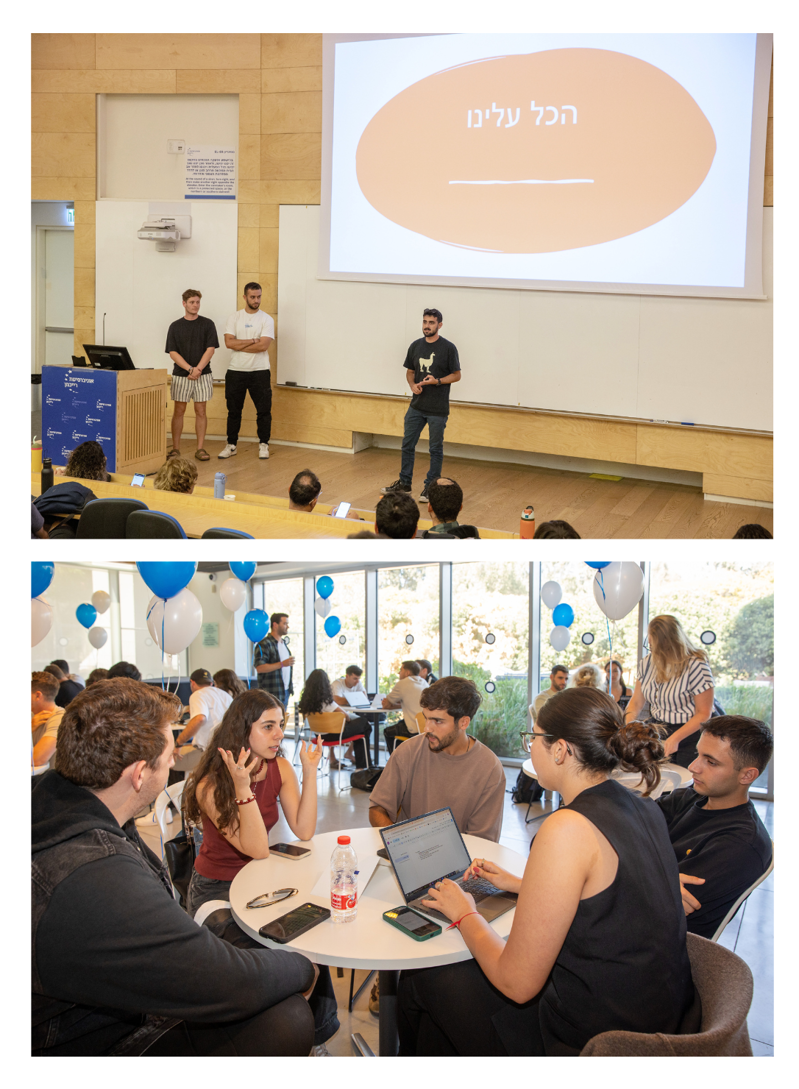
For our presentation, I highlighted the connection between outsourcing, economic independence, and national security. I argued that while companies have a financial duty to pursue efficiency, that duty must exist within the context of Israel’s broader resilience. The sanctions following the Gaza war were, and are, a keen reminder of Israel's vulnerabilities. More broadly, the market reminded me (and I hope many decision makers) that security may be executed physically by the military, but it's funded by the economy and will of a civilization. G-d forbid, other allies or trading partners find a reason to sanction Israel, certain job markets may need to be completely restructured. This would waste precious time and capital. All restructuring would likely come during a time when resource scarcity would be exaggerated. Like a war.
Future leaders must approach Israel’s economy and national defense as self-sustainability through Sustainability-Centered Design, not by making companies sustainable, but by building them around sustainability as a core principle.. Our solution wasn’t only about business; it was about identity, resilience, and the shared understanding that doing what’s best for the country's safety should also be what's best for business long term.