


Fred Kofman’s Mindful Business Leadership Workshop
Dorin Mirilashvili, 3rd Year Business and Entrepreneurship student, Zvi Meitar Institute for the Legal Implications of Emerging Technologies
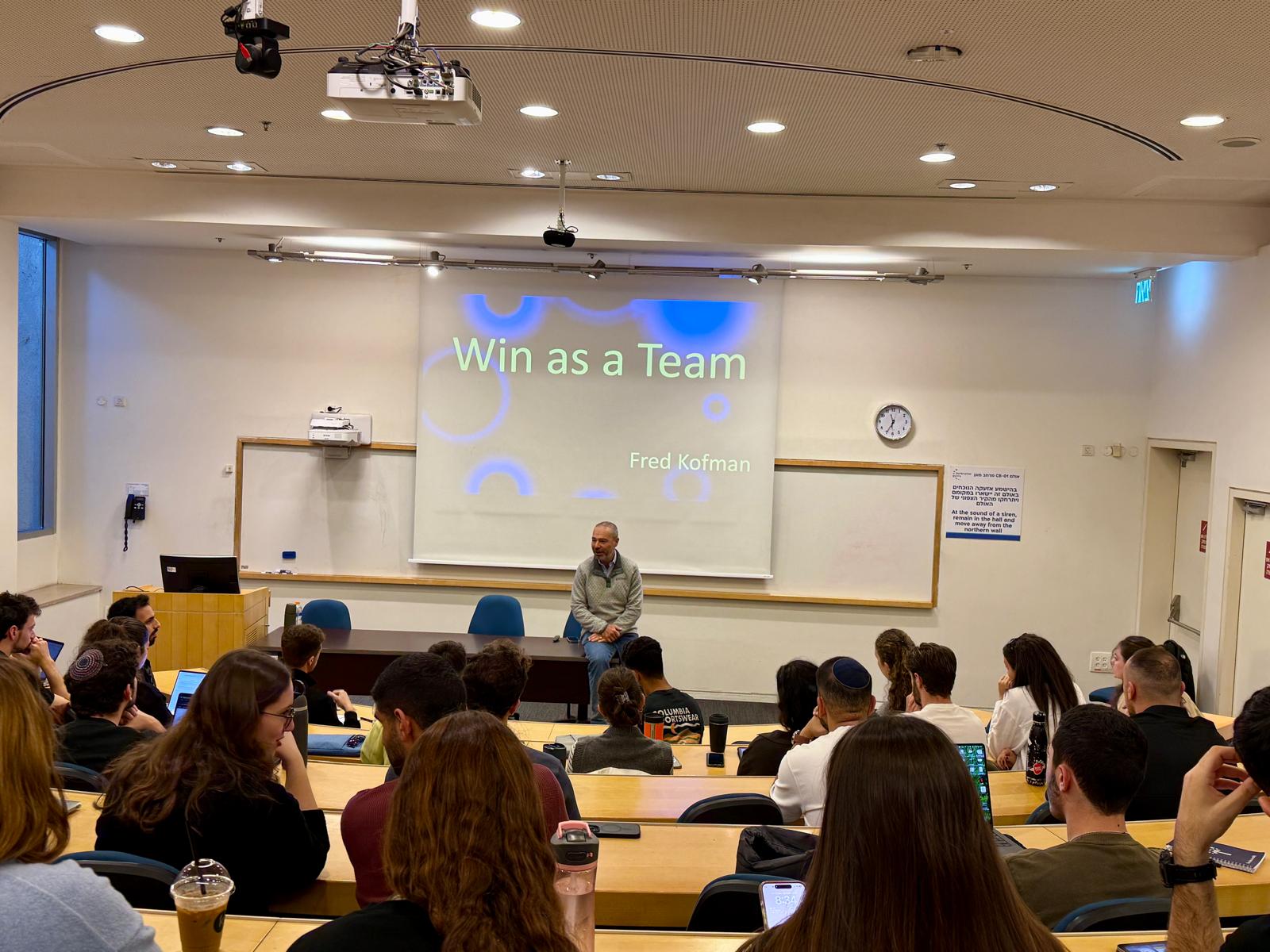
Over the last two Fridays, I participated in something truly special: the "Mindful Business Leadership Workshop" led by the legendary Fred Kofman.
This was an exclusive course open only to students in the Honors and Special programs, and the experience was so compelling that I even spent my birthday in class. And I wouldn’t have had it any other way.
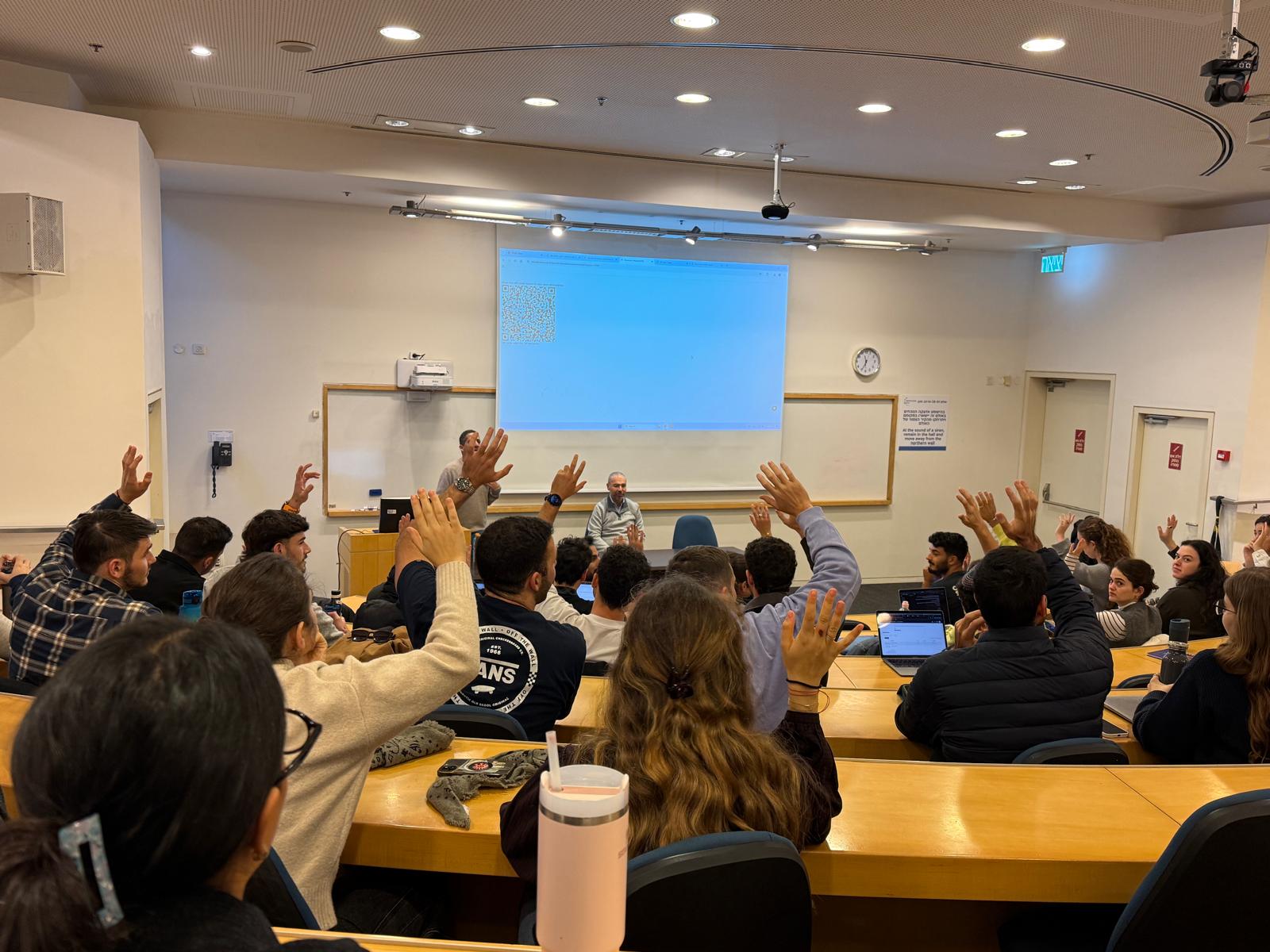
If you aren't familiar with Fred Kofman, his resume speaks for itself. He is the founder of the Conscious Business Center International and a former Vice President of Leadership Development at both Google and LinkedIn. He has advised some of the most influential CEOs in the world, including Satya Nadella of Microsoft and Sheryl Sandberg of Facebook. Having the chance to learn directly from a mind that has shaped the culture of Silicon Valley giants was a rare privilege.
One of the first concepts that struck me was Fred’s analogy of the goalkeeper. He asked us, "What is the job of a goalkeeper?" Naturally, we thought the answer was "to stop the ball." But Fred corrected us: the goalkeeper's job is to help the team win. Sometimes that means stopping the ball, but the ultimate mission is victory. This shifted my perspective entirely. As Fred put it, "Your job is not your job. It’s to help your team win". In any organization, if we focus solely on our narrow tasks and ignore the wider mission, we fail.
The core of the workshop revolved around the concept of "Response Ability": the ability to respond. Fred drew a sharp distinction between a "victim" and a "player." A victim explains failure by pointing to external factors: "It was raining, so I got wet." A player takes ownership: "I got wet because I didn't bring an umbrella".
He taught us that the price of innocence is powerlessness. If we blame the system or others ("He made me do it"), we might feel innocent, but we lose the power to change the outcome. A true leader asks, "What challenge did I face, how did I respond, and what can I do now?". We also dove deep into the mechanics of difficult conversations. Fred emphasized that to reach a mutual agreement, you must "empty your mind to listen first". You can't just wait for your turn to speak; you have to genuinely get curious about the other person's logic.
Leaving this workshop, I feel equipped with a new mental toolkit. Whether I'm working on a group project or leading a team, I now see "teaming" as an active verb rather than a static role.
I want to extend a huge thank you to Dr. Yossi Maaravi, Sharon Zahavi and the Adelson School of Entrepreneurship for organizing this incredible opportunity. It was the perfect way to celebrate another year of growth.