

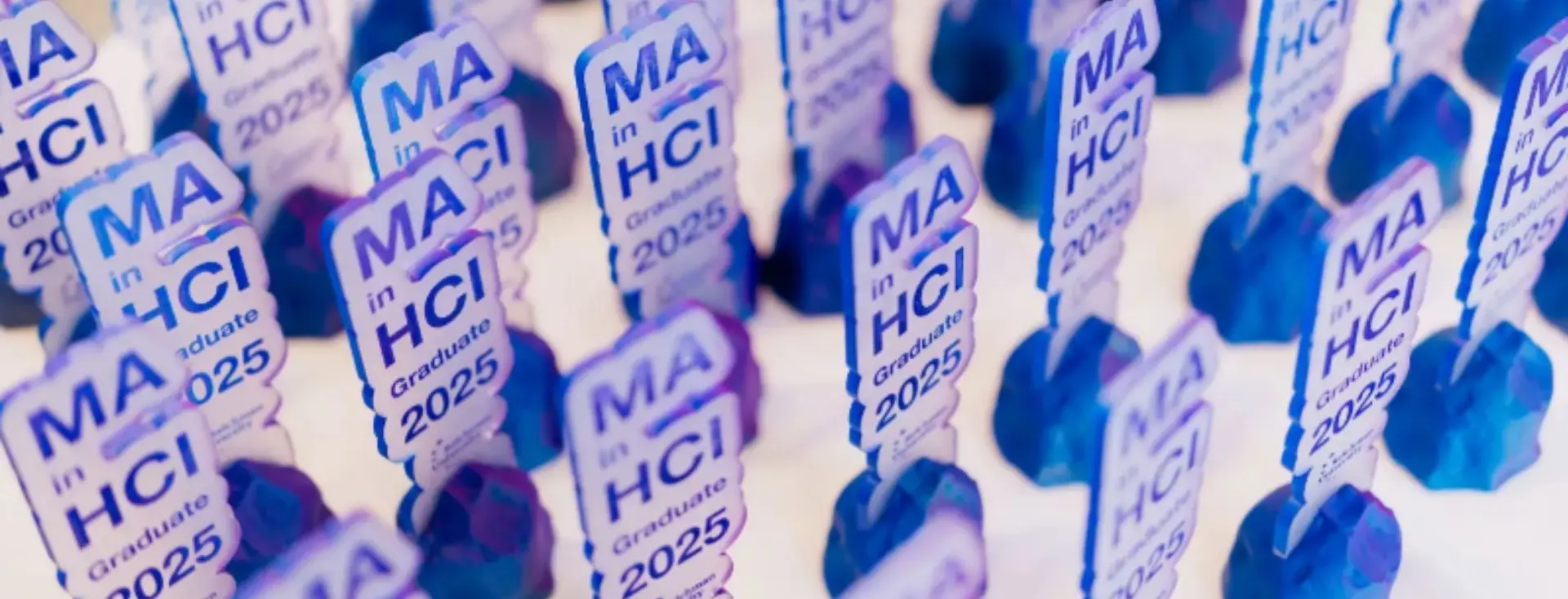


Last Friday, Reichman University’s MA in Human- Computer Interaction (HCI) Class of 2025 gathered to present their final projects at the annual Graduate Exhibition. The event showcased a human-centered vision of innovation where AI, design, and empathy intersect.
During the degree, students explored how emerging technologies can respond to deeply human needs. Projects in Human–AI Interaction examined trust, collaboration, and the social meaning of intelligent systems. One VR study investigated how an AI assistant’s visual appearance, human-like versus abstract, shapes teamwork and user trust. Another thesis explored how subtle robotic gestures influence whether a machine feels like a partner rather than a tool.
AI-driven healthcare solutions highlighted the program’s commitment to real-world impact. Aria, an AI triage nurse, demonstrated how conversational interfaces and biosensing can support emergency department prioritization, reducing cognitive load while improving patient safety. Pulse, developed in collaboration with industry partners, addressed critical communication breakdowns in hospital workflows, positioning AI as a “single source of truth” in chaotic clinical environments
Students presented tangible and speculative designs reflecting life in Israel’s current reality. From wearable calming-alert systems developed during wartime to physical-digital memorial concepts supporting collective grieving, the projects revealed how design can mediate fear, loss, and resilience.
More than a showcase of prototypes, the exhibition offered a glimpse into the future of HCI: a field where innovation is measured not only by technical sophistication, but by its capacity to support trust, dignity, care, and human experience.