

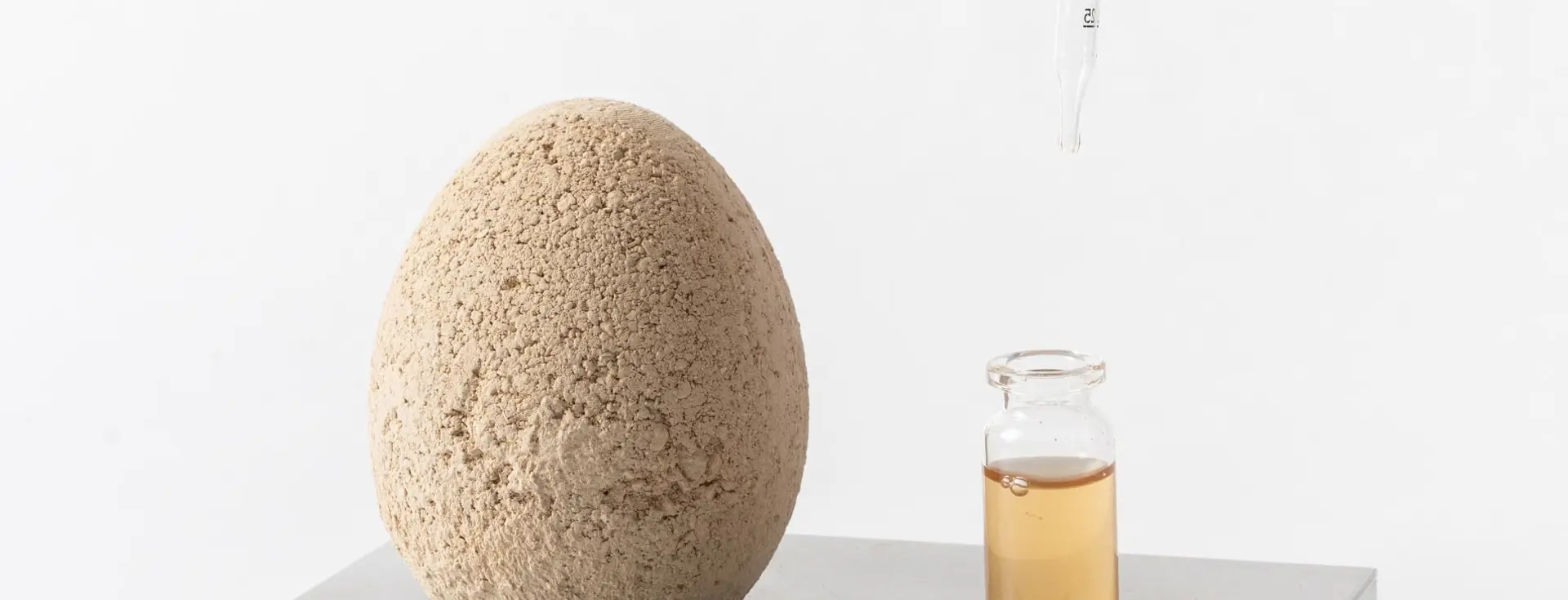


As part of her final project for a Bachelor’s degree in Industrial Design at Bezalel Academy of Arts and Design, student Adi Ioshpe embarked on a pioneering initiative that blends the disciplines of industrial design and microbiology in an innovative way. Under the joint guidance of Dr. Ilana Kolodkin-Gal from the Scojen Institute for Synthetic Biology at Reichman University, and Maya Ben-David, a lecturer at Bezalel, Adi's project explored the novel use of bacteria in the concrete industry. Specifically, her research focused on the regenerative properties of bacteria and their potential application in healing cracks in concrete, offering groundbreaking, sustainable solutions with the potential to significantly transform traditional industrial design practices.
This project sits at the cutting edge of scientific and creative innovation, integrating advanced microbiological technologies to address the pressing need for sustainable and environmentally friendly design solutions. By exploring the natural regenerative abilities of bacteria, Adi demonstrated how interdisciplinary collaboration can bring fresh perspectives to industrial challenges, promoting a future in which design and biology work together to create sustainable materials. Her work exemplifies the power of cross-disciplinary research, demonstrating how scientific understanding can inspire innovative design approaches that not only solve practical problems but also contribute to a more sustainable world.
Her research and creative process were supported by a dedicated team of researchers, including Dr. Liat Rahamim Ben-Navi, Scientific and Technical Director of the Scojen Institute, Dr. Hilit Levy Barazany, Senior Researcher and lab manager of the Kolodkin-Gal and Morgenstern-Frenkel Labs, and graduate student, Eng. Avichai Nahami. The project exemplifies the successful collaboration between institutions and fields, showcasing the possibilities when design and science intersect.
Photographers: Ziv Harush, Nadav Goren