


Conference
The International Working Group on Subterranean Warfare
This website uses cookies for functional reasons and to improve your browsing experience. By continuing to use our website or by closing this notice you consent to our privacy-policy.
XThe International Working Group on Subterranean Warfare
The working group held its inaugural meeting in December 2019 at Reichman University as part of the Subterranean Threats in War and Peace Conference, co-sponsored by the Lauder School of Government, Diplomacy and Strategy, the Harry Radzyner Law School, the Sammy Ofer School of Communications, and the International Institute of Counter-Terrorism at Reichman University; as well as the Embassy of the United States, the Modern War Institute at West Point, and the Lieber Institute for Law & Land Warfare.
The Subterranean Challenges in War and Peace Conference was the first academic conference ever held on subterranean warfare. Conceived as an interdisciplinary undertaking, it brought together experts from all over the world for two days of panels and informal gatherings, along with an exclusive look at the Hezbollah-dug tunnels at Israel's northern border.
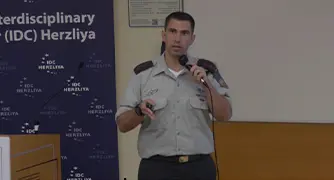
LTC Aviv Amir explains how Israel detected and destroyed the tunnels in five stages.
Prof. Beer argues that tunnels are not legally that different from other means of warfare.
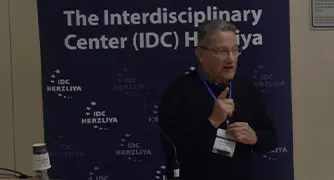
Ron Ben Yishai reviews how Israel has contended with underground threats since they appeared in the region.
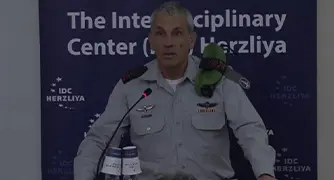
Maj. Gen. Edelstein discusses how modern warfare has come closer to civilians, particularly via the use of tunnels and cyber tactics.
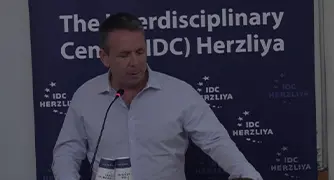
Prof. Hirschberger discusses the psychological aspects of subterranean threats.
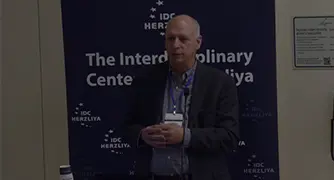
Michael Meir discusses the US classification of subterranean threats.
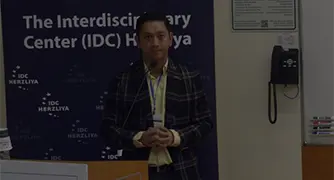
Maj. Sioson discusses the siege of Marawi.
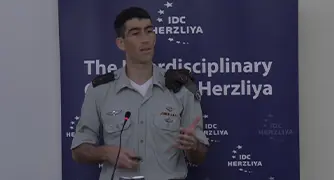
LTC Ittai discusses tunnel detection and the role of technology in countering subterranean threats.
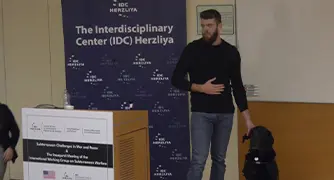
This is the personal account of a former soldier injured while neutralizing a subterranean threat.
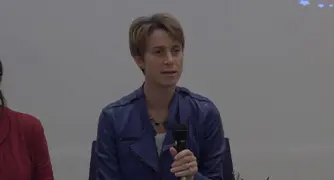
Prof. Blank provides an overview of the legal questions that arise in subterranean warfare.
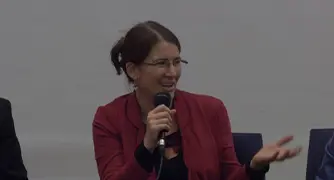
Dr. Radin discusses the unique character of subterranean warfare from a legal perspective.
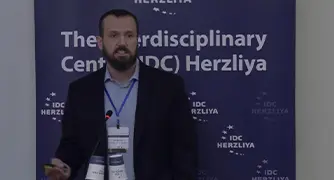
Maj. Spencer reviews the evolution of tunnel bombs, a unique use of the underground.
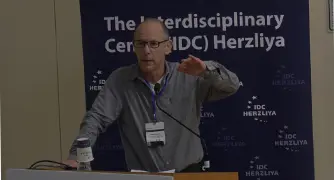
Prof. Statman addresses the question of whether there is something inherently objectionable in the use of tunnels.
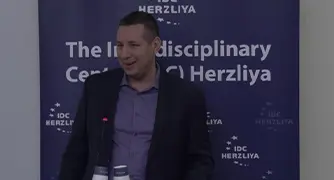
Dr. Stoil gives an historical overview of underground warfare.
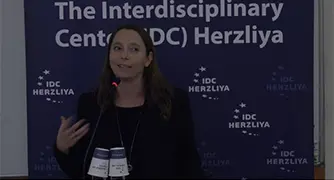
Dr. Yarchi presents the way in which underground threats are portrayed and framed in the media.
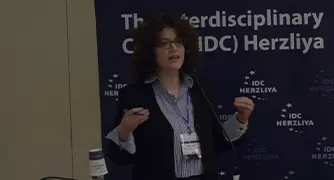
Prof. Weill discusses the risks of terrorist kidnapping associated with tunnel warfare, and the underlying policy and legal ramifications.
LTC White discusses legal challenges arising from underground warfare.
Prof. Zakay discusses how underground warfare challenges the psychological welfare of soldiers.
The discussion analyzes operational and legal issues that arise when underground warfare meets urban warfare.

Contending with Underground Threats
How do law and strategy account for different types of tunnels (smuggling, cross-border, etc.)?


