
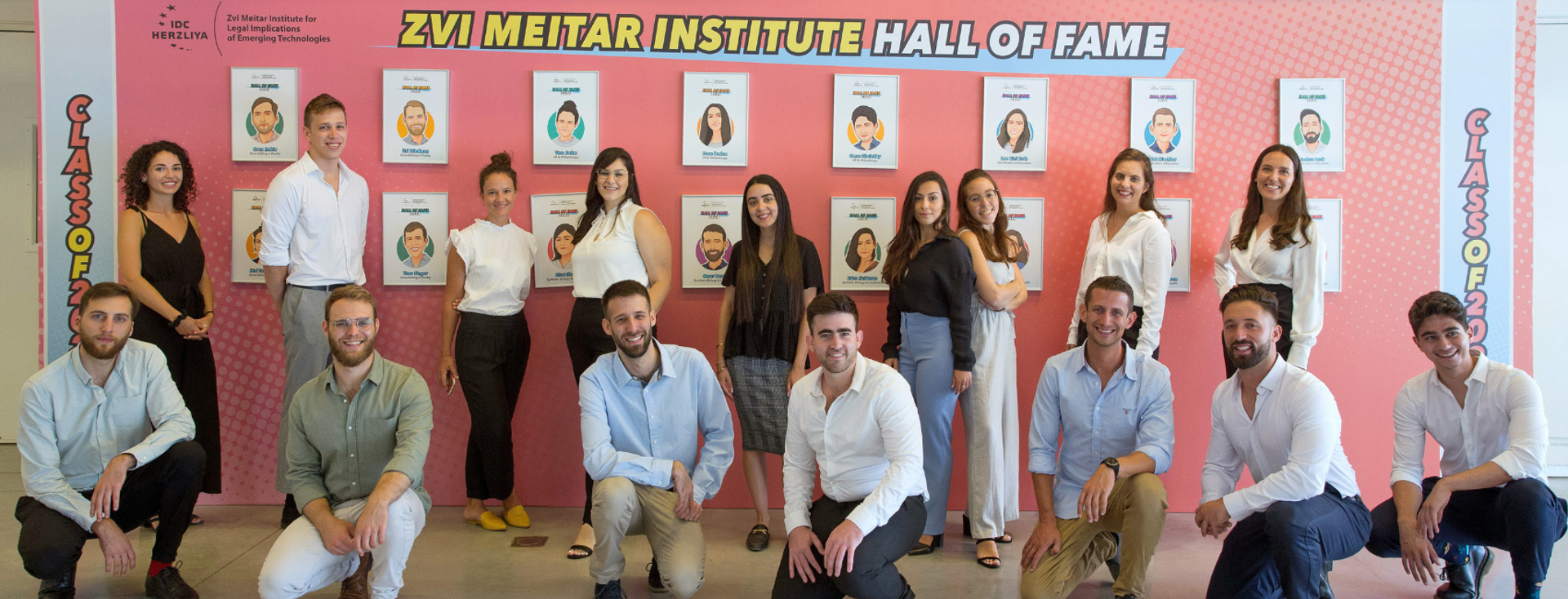


The Zvi Meitar 6th Annual Closing Event was held in June, 2021. A team of 16 outstanding students worked diligently over the course of the year on their research projects and presented their conclusions on stage. Their projects focused on cutting-edge technologies and their diverse implications as described below.
Changing Minds to Clear Mines: Detecting Landmines by Using Synthetic Biology
As of today, there are over 100 million landmines buried in 60 different countries worldwide and the current detection methods are inefficient, unsafe and expensive. A group of three students explored the benefits and challenges of synthetic biology solutions to support landmine detection. One potential solution: bacteria engineered to react to explosives inside the landmines, exposing their location. Notwithstanding the clear benefits, the students research social and legal considerations, such as the lack of regulations, the potential for mutations, and concerns with conventional wisdom regarding genetic engineering. The students suggested that much of the concerns can be ameliorated by creating awareness and changing the way policymakers and the public think about Synthetic Biology.
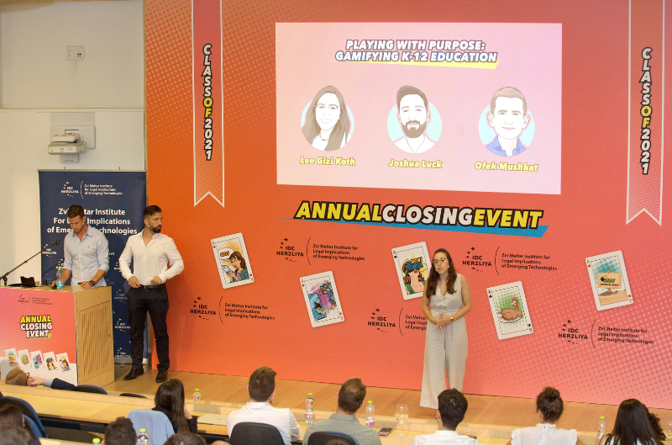
Photo: Students presenting in the event
Playing with Purpose: Gamifying K-12 Education
Three students researched the concept of gamification in K-12 education. They specifically focused on how it can enhance student motivation and engagement. Alongside the benefits, our students explored some of the legal, social and ethical repercussions. The students focused on concerns related to the data mining of students’ information, especially when the students are underage, a concern exacerbated when gaming creates an atmosphere where students incorrectly perceive the risks related to information sharing and to disclose more of their personal information than they would in other circumstances. The digital divide remains a important social consideration. The team recommended specific efforts to raise awareness of the risks involved in gathering information and, as a result, reducing it.
Gene Editing in Poultry: Stop Chickening Out
CRISPR technology can prevent the suffering of billions of baby chicks annually. A team of four students conducted an extensive survey of 400 participants across Israel to assess the public’s acceptance for using tool like CRISPR in poultry farming. The students found that public fear of CRISPR needs to be dealt with before the technology can be used broadly in agribusiness. The students proposed a committee of relevant stakeholders to better promote the use of this technology for the benefit of the public health. In this context, the team also proposed abeling regulation that would indicate the quality and safety of genetically modified livestock.
Saving Lives One Tweet at a Time: Using Social Media to Combat Suicide
In light of increased suicide in the young digital generation, a number of measures have been developed in recent years to identify early signs of suicide intentions on social media. A group of three extraordinary students researched how AI technology employed on social media can actually support and save lives. Alongside the benefits of identifying youth at risk, a main concern is the privacy of the users, the negative stigma that their identification creates, and the onerous terms of use of the various platforms. The team recommended promoting a regulation that will support the use of this technology.
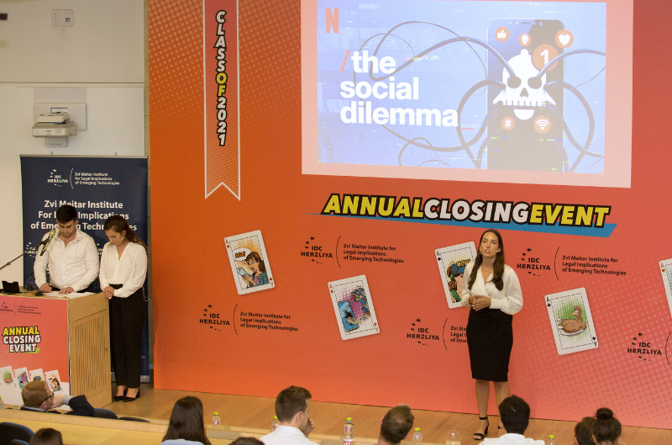
Photo: Students presenting in the event
Stepping Over the Virtual Line: VR & Philanthropy
Three students researched how immersive VR can increase empathy and inspire donors to give to charitable causes. However, the same qualities which make VR an excellent medium for charities can also have major negative ethical and legal implications. A main concern is that the high degree of impressiveness can cause psychological damages such as post-traumatic stress disorder, especially if disturbing or violent content is consumed. A further concern is that the creator of a VR experience might take advantage of the trust we place in VR experiences to misuse the technology to distort reality to create false narratives for naïve audiences. The students found that self-regulation and oversight are the best solutions for a diverse, disparate and international charity sector.
The Zvi Meitar Emerging Technologies Program, provides outstanding students from all schools across the campus, a one year of customized learning, practical tools and hands-on experience in order to examine legal, ethical and social challenges of new and emerging technologies.