



Responsible AI: Regulation Supporting Innovation
The Zvi Meitar Institute in collaboration with Synerg AI Community and AI Policy and Regulation Center at the Ministry of Innovation, Science and Technology, held a conference on "Responsible AI: Regulation Supporting Innovation" and brought together leaders from government, academia, and industry to address the far-reaching ethical, regulatory, and societal implications of AI.
Minister Gila Gamliel opened the conference by emphasizing the crucial role of public trust in AI. While the potential of AI is vast, she stressed the importance of ensuring its responsible and ethical integration into society. Minister Gamliel also presented Israel’s national program for advancing AI, which aims to foster the development of human capital and integrate advanced technologies across key sectors.
Following her remarks, Josef Gedalyahu, Director of AI Regulation and Ethics, Ministry of Innovation, Science, and Technology, delivered a keynote address focusing on AI regulation from a national perspective. Gedalyahu outlined the challenges Israel faces in leveraging AI to its full potential, noting the country’s recent decline in global rankings. He argued for a comprehensive governmental framework to improve infrastructure and ensure that Israel strengthens its position as a global leader in AI innovation.
The conference continued with two thought-provoking panels that explored different facets of AI’s impact on Israel. The first panel, moderated by Dr. Yuval Reinfeld, faculty of law from Reichman University, examined the theme of safe AI, focusing on regulation, preparation, and implementation. The panelists discussed the need for a unified regulatory language to ensure that AI’s integration is both innovative and socially responsible. Sarit Felber from the Legal Counsel at the Ministry of Justice shared her insights on AI’s impact on the financial sector, stressing the importance of developing clear regulatory frameworks to address issues like market concentration and biases in investment advice. Dr. Osnat Luxenburg, Director, Medical Technology, Innovation, Health Information and Research Directorate Israel, Ministry of Health, highlighted the necessity for flexible regulation in healthcare, where AI’s potential to revolutionize patient care also presents challenges related to public trust, unforeseen risks, and ethical concerns.
Meanwhile, Merav Peretz-Belinsky, VP President and Data, National Digital Agency and Meirav Zerbib, Director of Research and Development from the Ministry of Education, discussed how AI is transforming government services and education. They emphasized the need for investment in training and infrastructure to ensure that AI can be used effectively and ethically across these critical areas. The panel concluded that while AI holds great promise, regulatory frameworks must be prepared to ensure that its deployment remains responsible and ethically sound.
The second panel, moderated by Dr. Aviv Gaon, faculty of law from Reichman University, shifted the focus to the challenges and opportunities of AI in various industries. Panelists from industries such as insurance, healthcare, and education shared their experiences in implementing AI technologies. Member of Knesset Orit Farkash-Hacohen provided valuable insights into the government’s approach to AI, addressing the security and strategic challenges that accompany its rapid development. Daniel Schreiber, Co-Founder and CEO, Lemonade, discussed AI’s role in reducing costs in the insurance industry, stressing that AI’s potential should also be balanced with considerations around employment and its broader economic impact.
Hila Goldman Aslan, Founder and CEO, DiA Imaging Analysis, spoke about the importance of maintaining reliability and trust in the development of medical AI products, while Hila Hubsch, Head of Corporate, External Legal Affairs, Microsoft Israel, emphasized the need for robust training and government regulation to ensure the safe advancement of AI technologies. Dr. Tehila Shwartz-Altshuler, Senior Fellow, Israel Democracy Institute, rounded out the discussion by addressing the difficulties in creating effective regulatory frameworks that can keep pace with the rapid evolution of AI technologies. The panel concluded that while AI offers substantial opportunities for innovation, it’s vital to adopt a balanced approach that ensures social and ethical responsibility while fostering progress in AI development.
To conclude, the event highlighted the importance of creating clear regulatory frameworks, fostering public trust, and investing in infrastructure and education to ensure that AI can benefit society as a whole. In addition, the future of responsible AI depends on strong collaboration between government, academia and industry. Each sector brings unique perspective, and by working together we can ensure that AI develops in an ethical, inclusive and impactful way.
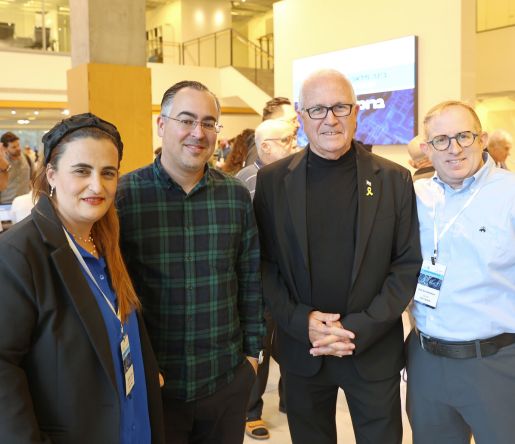
From left to right (Photo Credit: Oren Shalev):
Meriav Zerbib, Director of Research and Development Department, Ministry of Education; Dr. Aviv Gaon, Faculty of Law, Reichman University; Gadi Arieli, Director General of Minister of Innovation, Science and Technology; Prof. Dov Greenbaum; head of Zvi Meitar Institute, Reichman University