


Law, Innovation, and AI: How Artificial Intelligence is Changing the Legal Landscape
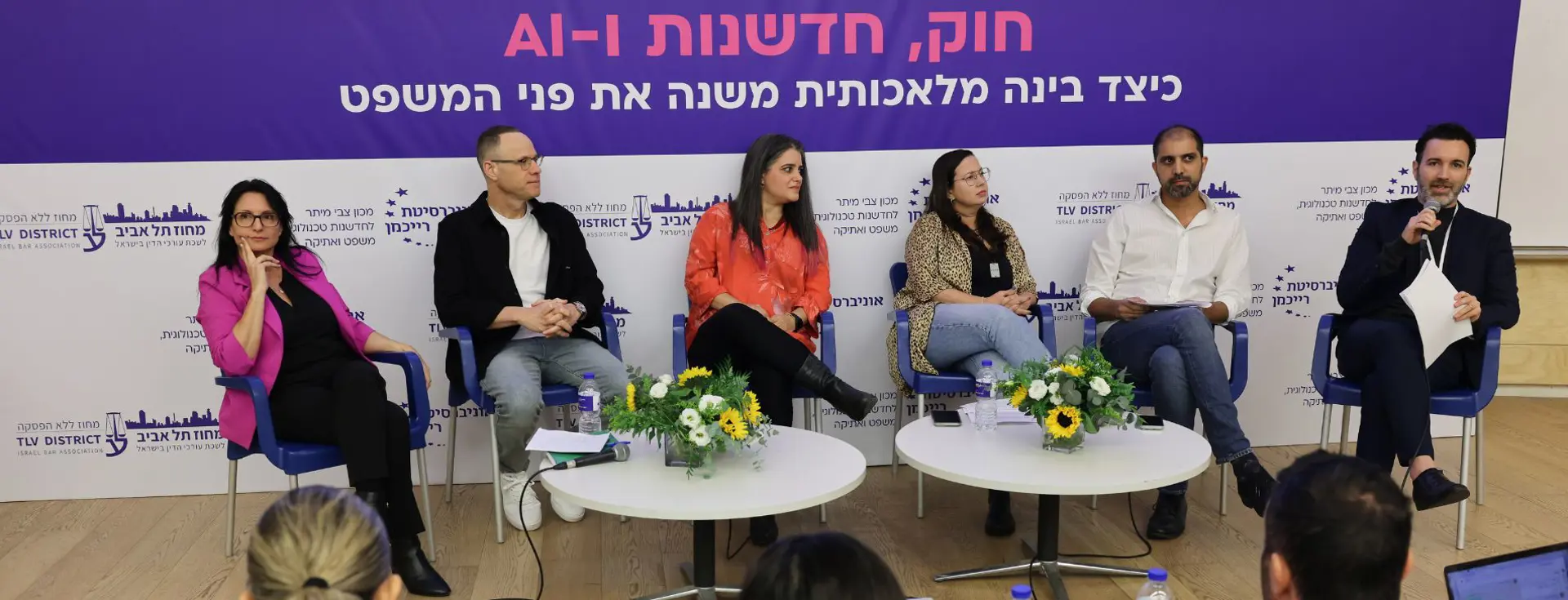
In December, the Zvi Meitar Institute in collaboration with the Israel Bar Association, Tel-Aviv District, held a full-house conference on "Law, Innovation, and AI: How Artificial Intelligence is Changing the Legal Landscape". The conference aimed to discuss the intersection of technology and law, examining the regulatory and legal challenges posed by AI in both the local and international arenas.
Prof. Lior Zemer, Dean of the Harry Radzyner Law School at Reichman University opened the conference by emphasizing the importance of combining human interaction with technology and honoring the legacy of the late Zvi Meitar in shaping Israeli law. Attorney Meirav Bar-Zik, from the board of the Israel Bar Association then discussed AI's transformative impact on the legal profession, highlighting how it is reshaping industries across the globe.
Ben Haklai, National Technology Officer, Microsoft Israel, delivered a keynote on the growing competition in the AI era, discussing the role of regulation in promoting transparency, fairness, and aligning technological solutions with evolving regulations.
The conference featured three panels and two expert interviews, delving deeper into AI's impact on law. The first panel titled " Managing Legal Risks and Defining Liability in the AI Era", moderated by Attorney Eitan Zafrir, Partner, FIRON law firm, discussed the intersection of technology and law. Attorney Eyal Shaguy from AYR emphasized the importance of preparing for international regulations, similar to the European AI Act. Attorney Jacob Enoch, Head of M&A, FIRON law firm called for adjustments to traditional legal norms, while Dr. Omri Rachum-Twaig , Partner, FISCHER (FBC &Co.) highlighted AI’s risks, such as misuse and unexpected outcomes. Attorney Meir Levin, Deputy Attorney General at the Ministry of Justice, and Attorney Michal Brand-Gold, General Counsel, ActiveFence emphasized the need for a balanced regulatory approach that fosters innovation while ensuring public and individual security.
The second panel, "Regulating AI in Industry: Perspectives and Applications," moderated by Dr. Yuval Reinfeld, Faculty of Law, Reichman University, focused on how companies must navigate and address regulatory challenges related to AI. Dr. Shlomit Wagman, Global Chief Regulation and Compliance Officer from Rapyd discussed Europe’s leadership in technological regulation, urging Israel to align with global standards. Attorney Yehuda Ben Yaakov, Public Policy Manager at Meta Israel explained the challenges posed by inconsistent European regulations and presented the company's open-source model as a solution. Miri Berger, Co-Founder and CEO ay Degrees6 emphasized AI's potential to assist people with disabilities, while Attorney Liat Afriat-Glezer, Government Affairs and Public Policy Manager, Google Israel, discussed how Google approaches responsible AI and addresses ethical concerns like disinformation. Tomer Zucker, Business Development Manager from ID-D advocated for regulatory innovation to bridge the gap between technology and law. The panel concluded with the recognition of the need for thoughtful regulation that encourages innovation while protecting privacy and user data.
Prof. Dov Greenbaum, Head of the Zvi Meitar Institute, interviewed Attorney Adam Snukal, IP and Technology Lawyer and Shareholder from Greenberg Traurig, a global law firm, about AI’s global challenges in sectors including finance, patents, and healthcare. Adam highlighted the importance of asking the right questions and controlling the use of AI, such as verifying information and ensuring third-party rights, and called for the creation of systems that support risk reduction. Additionally, he provided an in-depth perspective on the need for a balanced regulatory approach that fosters innovation while minimizing risks, concluding with an interesting observation that readiness to adopt new technologies will be the key to success in the age of artificial intelligence emphasized the need of developing systems that minimize risks while fostering innovation, highlighting the importance of striking a balance in regulation.
The third panel, "AI and Technological Innovation in Law: Tools for Enhancing Legal Services," moderated by Attorney Noa Mayer from Reichman University, discussed how AI is transforming legal practice. Ilan Admon, CTO, LawGeex and Attorney Tamar Sacerdoti, VP Operations, Darrow, explained how firms are using AI to improve workflows. Attorney Assaf Naveh, Partner from Meitar Law Firm described the process of selecting AI tools that suit a firm’s needs, while Tzah Drucker, CEO, from Guideline Group emphasized the importance of paid tools for security. Ido Bar-Gil, Founder and CEO from Next-Gen Solutions suggested focusing on high-impact problems and consulting with experts during tool selection. The panel concluded with the understanding that AI can enhance legal practice by improving accuracy, innovation, and transparency while safeguarding client data.
The conference closed with an interview conducted by Dr. Dalia Ken-Dror from Reichman University with Attorney Emma Brackenfeld, Legal Advisor at Wiz, about AI in cybersecurity. Brackenfeld stressed the importance of proactive measures to address security threats and the need for global cooperation in managing regulatory and technological challenges in cybersecurity.
In conclusion, the conference provided an in-depth look at the challenges and opportunities AI brings to the legal world, emphasizing the need for flexible regulation that incorporates tailored regulatory tools. We thank our partners at the Israeli Bar Association, Tel Aviv District, for their fruitful collaboration and look forward to continued dialogue on advancing legal innovation in Israel and beyond.
Key Insights:
1. Regulation & Innovation: Balance is needed to foster innovation while addressing risks like misuse, privacy, and ethics.
2. AI in Legal Practice: AI improves efficiency and accuracy but requires careful tool selection and data security.
3. Global Challenges: Inconsistent regulations (e.g., Europe) call for global cooperation and alignment with standards like the EU AI Act.
4. Cybersecurity: Proactive measures and ethical AI practices are essential to combat threats like disinformation.
5. Societal Impact: AI can assist marginalized groups but requires ethical and legal safeguards.
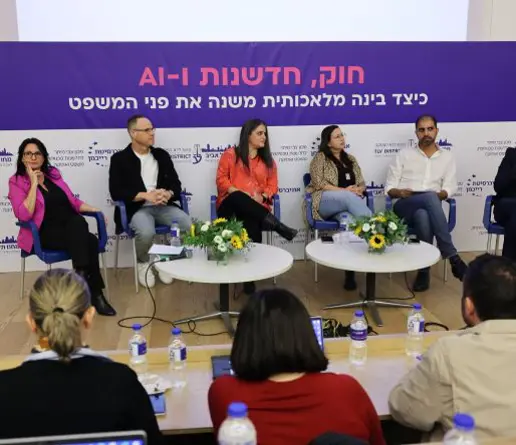
from right to left (Photo Credit: Gilad Kavalerchik):
Dr. Yuval Reinfeld, Faculty of Law, Reichman University; Yehuda Ben Yaakov, Public Policy Manager, Meta; Liat Efrati-Glazer, Government Affairs and Public Policy Manager, Google Israel; Miri Berger, Co-Founder & CEO, 6Degrees; Tomer Zucker; Business Development Manager, D-ID; Dr. Shlomit Wagman, Global Chief Regulation and Compliance Officer, Rapyd